Ford’s EV program took some major hits last year resulting in an $8.5 billion write-down. Among other things it’s killed the F-150 Lightning and scrapped plans for a 3-row SUV. But don’t count Ford out. In a major strategic shift, it’s investing billions more to develop a new line of low-cost EVs. And Autoblog was invited to get an inside look at the Universal Vehicle program before its 2027 launch.
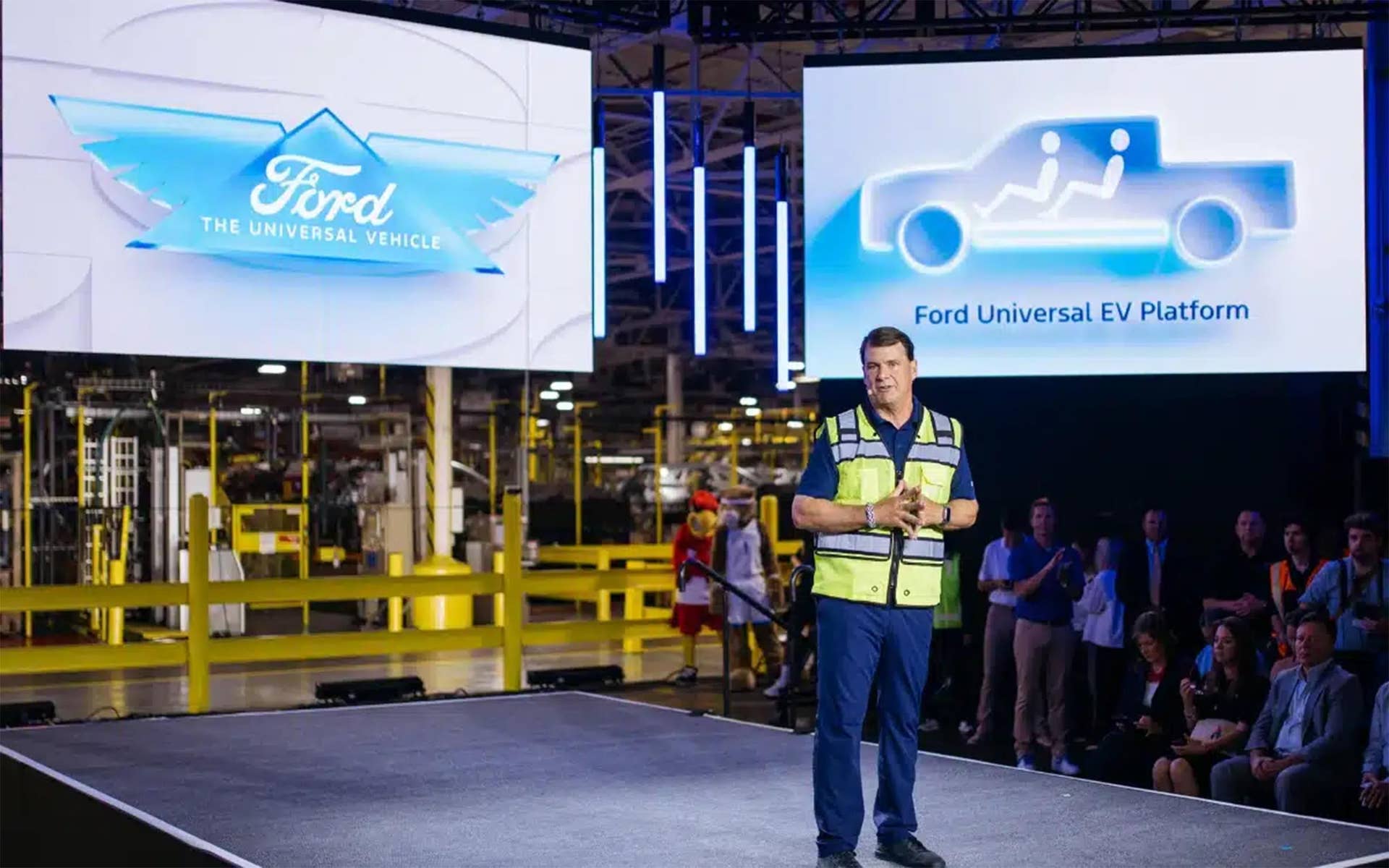
After taking an $8.5 billion write-down last year on its EV program one might expect Ford to steer clear of battery-electric vehicles. But, with the threat of new Chinese competitors looming ever more ominously, the Detroit automaker has launched a skunkworks program aimed at delivering a line-up of low-cost, long-range EVs.
The “Universal Vehicle” project’s mandate is a bold one: team members told to rethink just about everything but the shape of the wheel. And, in the process, they’re getting ready to launch the most radical makeover of the assembly process since Henry Ford switched on the first moving assembly line on October 7, 1913.
It’s a high-risk, multi-billion-dollar venture set to launch production sometime in 2027. And Ford offered Autoblog a chance to visit the project’s new campus in Long Beach, California where team members are given bounties to take the sort of risks automakers traditionally try to avoid at all cost.
Isolate the Culture

For his part, Alan Clarke admits he’s feeling “tons of pressure” these days. That shouldn’t come as a surprise considering that, in his role as Ford’s executive director of Advanced EV Development, he’s in charge of what’s arguably the most important project the automaker has launched in decades.
It’s not the first time the Detroit automaker has taken risks. It pushed the limits with the original 1986 Taurus sedan and the GT supercar designed by another skunkworks program. Both were meant to show how a small team could transform a massive multinational into a nimble enterprise. Yet, Ford today still moves like a lumbering battleship in an era when little drones are becoming the weapon of choice.
To give the Universal Vehicle project a better chance, Ford moved it to Long Beach, California, nearly 2,000 miles away from company headquarters in Michigan, explained Clarke. “Culture is local,” and the former Tesla engineer is determined to create an entirely new one from scratch. “Isolation has been incredibly important. Separate the culture and you separate the mindset.”
A Growing Team
There are currently about 500 members of the UV team and, even with another 100 soon to come onboard, that’s a fraction of the manpower normally found at a major car company. That said, the two buildings that make up the project’s campus are some of the most well-equipped in the Ford global system. There’s the requisite design studio equipped with the latest AI and virtual reality software, a battery lab that can simulate in days what would normally take months to test out. And the complex has one of just two closed dynamometers capable of recreating virtual any condition a future EV would be able to experience anywhere in the world, everything from the cold of an Arctic winter to the heat of a Saudi Arabian summer, complete with the light of a blazing Mideast sun.
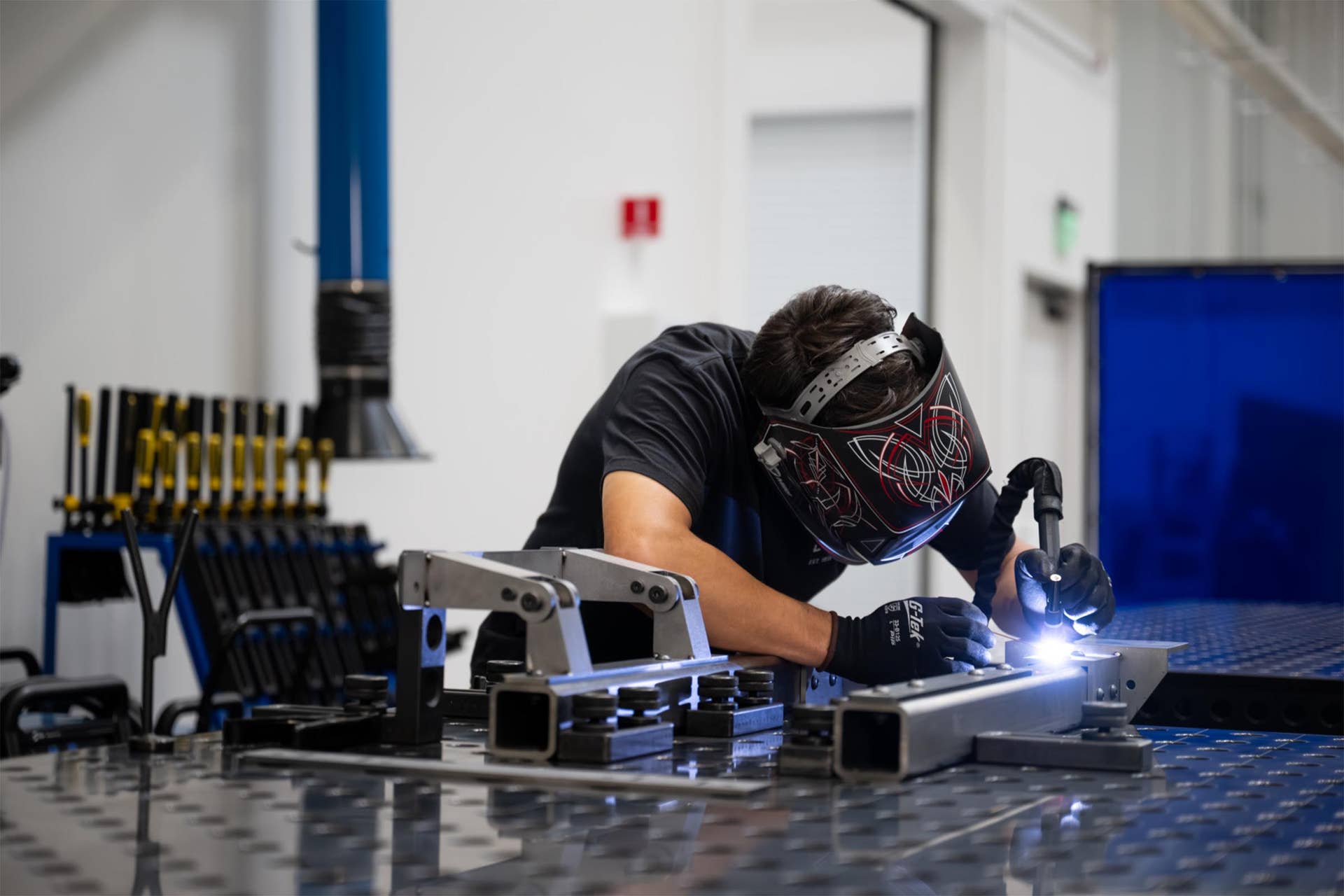
Better yet, “Everything is in close proximity,” noted designer Simona Merker, making it easy for team members to reach out to one another.
In a number of instances, Ford has reversed its traditional approach which often relies on outside suppliers to do things like developing the look and feel of seats, noted Scott Anderson, the UEV seating chief. His team can cut its own prototype foam cushions and seat covers, for example, in some cases saving weeks of development time.
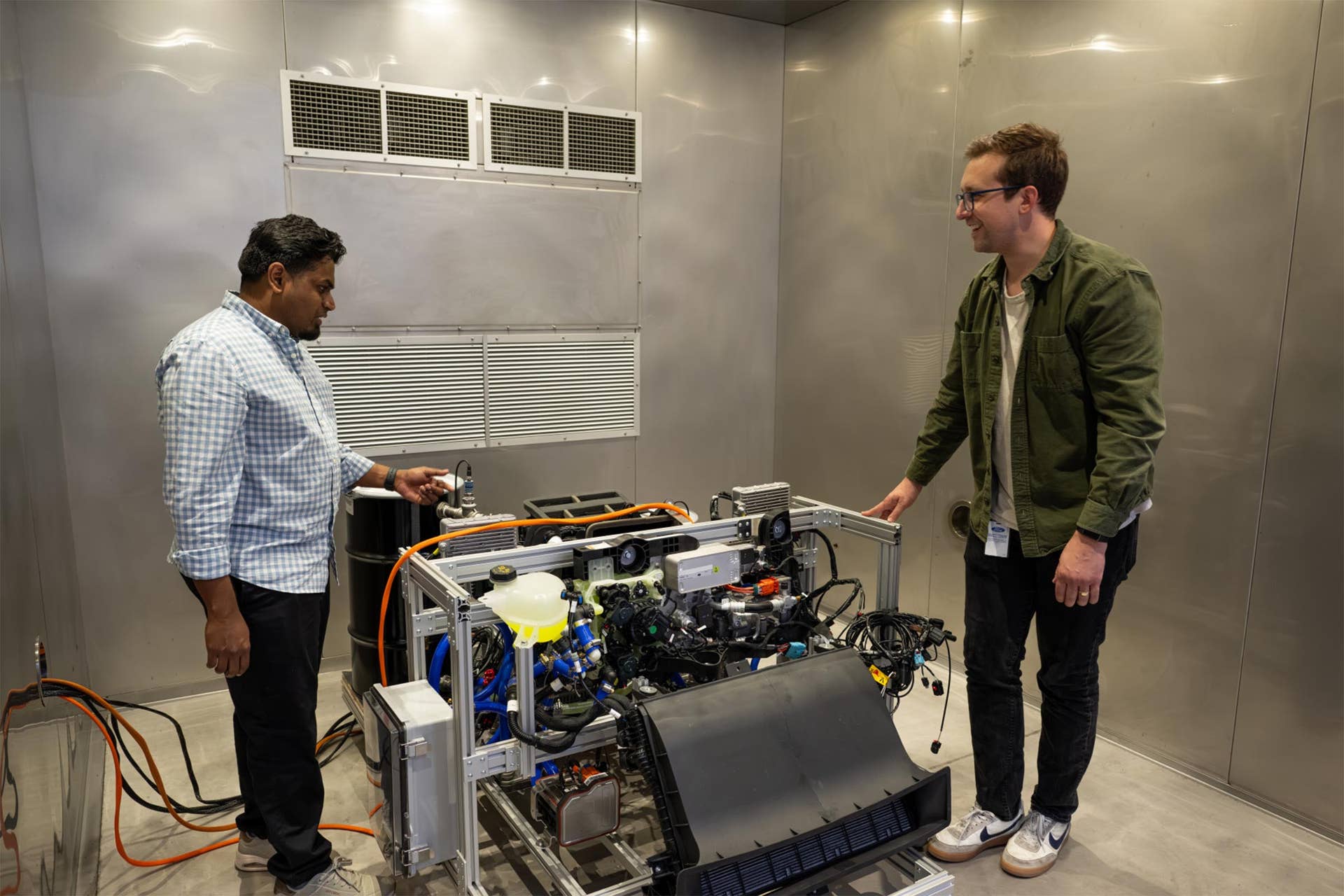
“Fail fast”
Like Clarke, each team member is under intense pressure. But not just to get things right. They’re encouraged to risks on new ideas under a “bounty” system Clarke’s management team has set up. In sharp contrast to Ford’s traditional risk aversion, there’s a recognition that not everything will work as planned. The key is to “find failures fast,” said hardware engineering manager Kevin Lundbert, then come up with something better.
If it works as planned, Ford hopes to avoid the sort of hits it’s taken to its image in recent years. The company that long used the tagline, “Quality is Job One,” faced an industry-record 153 separate recalls in 2025 affecting nearly 13 million vehicles in the U.S. Beyond that, it’s been spending billions fixing all manner of quality problems.
Quality really must be Job One with the Universal EV family. It can’t afford to repeat the eight separate recalls that the company’s recently discontinued F-150 Lightning has experienced since its launch four years ago.
More for Less
But that’s just one part of the challenge. EV sales surged almost eightfold from 2019 to 2024, reaching about 8% of the U.S. market. But the industry ran into trouble then reaching out to more mainstream buyers considering the typical battery-electric vehicle cost about $5,000 more than a comparable gas model. The troubles only grew worse with the phase-out of federal tax credits last September. Ford CEO Jim Farley is convinced his company needs to shift focus from high-end EVs to affordable alternatives, the first of the Universal Vehicles expected to come in around $30,000 – though Ford has so far sidestepped offering specific numbers.
Among the steps it’s taking:
- Universal EVs will use lithium-iron phosphate batteries, instead of more costly, trouble-prone lithium-ion technology found in most of today’s EVs. LFP chemistry has helped slash costs for Chinese EVs and, Ford claims, is quicker to charge and less prone to fires and other failures;
- Meanwhile, the packs will be more tightly packaged and serve as part of the actual structure of the vehicles they’re used in, simplifying construction;
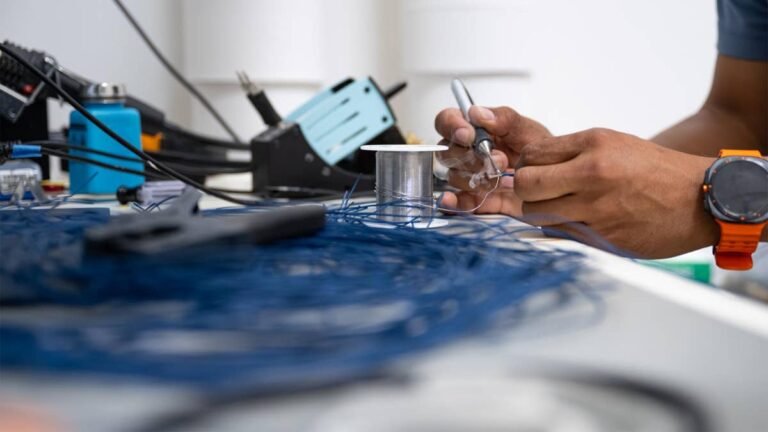
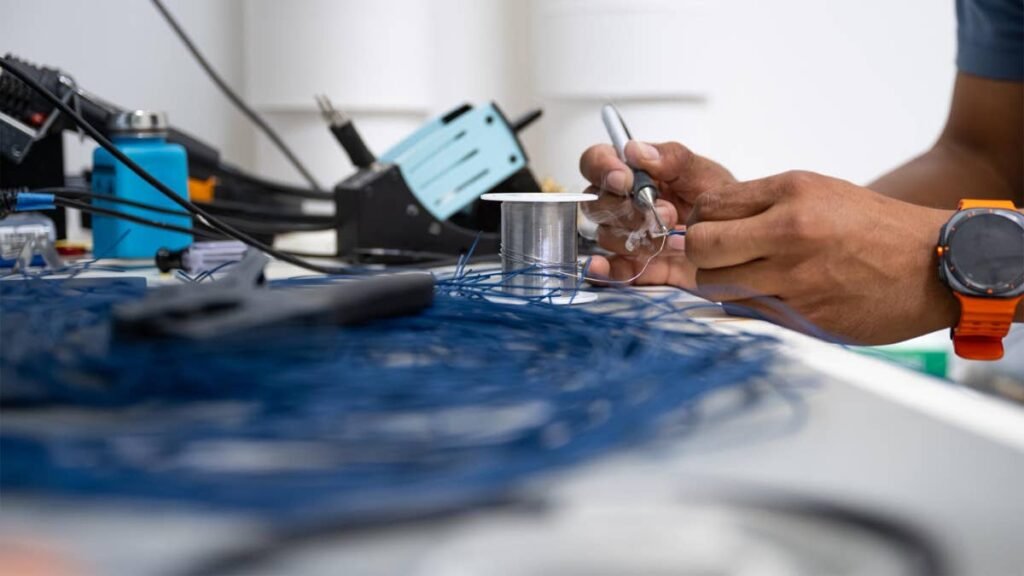
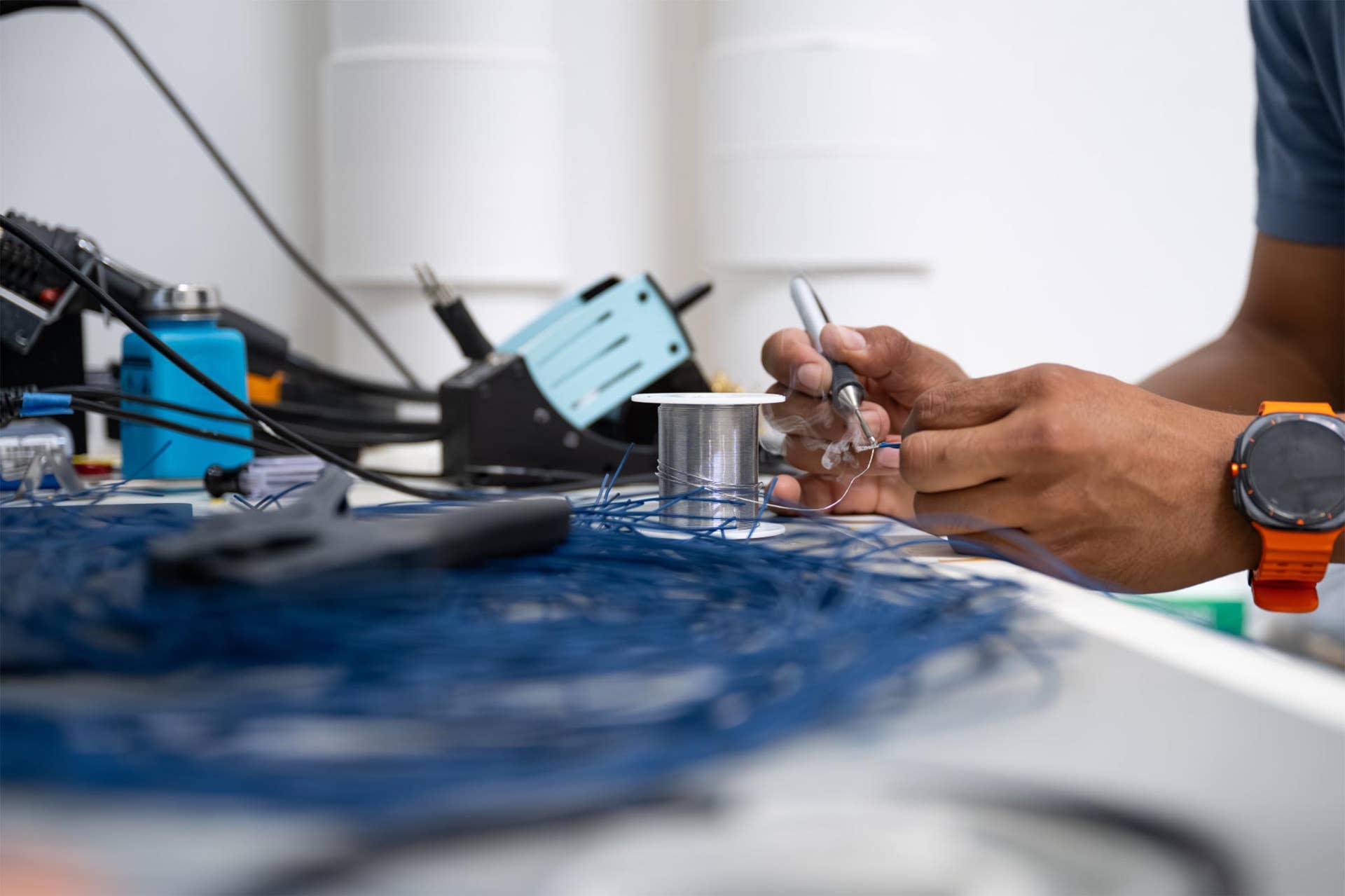
- Using a centralized computer network eliminates scores of microprocessors scattered around the vehicle while also cutting nearly a mile of copper out of the wiring harness, saving over 20 pounds and over $100 in material alone.
Holding Down Repair Costs
Ford also plans to adopt mega-castings – something already used by Tesla, as well as the Chinese, replacing dozens, even hundreds of stamped steel parts with a single cast piece of aluminum.

While not the first to use megacasting, Ford is taking a novel approach developed in cooperation with the insurance industry. Megacastings are notoriously difficult and expensive to repair. As an example of the UEV’s approach to creative thinking, body structures chief Vladimir Bogachuk, said each of these massive aluminum components will be marked with “cut lines,” showing where they can be cut, glued and welded back together, rather than leaving the service shop tech to try to figure things out on the fly.
Back to the Line
More than 100 years since the first moving assembly line went into operation in Highland Park, Michigan, Clarke’s team has come up with what it’s billing as a revolutionary alternative at Ford’s Louisville Assembly Plant. On a traditional line, cars are built up, almost like Lego models, individual parts added atop one another as the vehicles rolls forward.
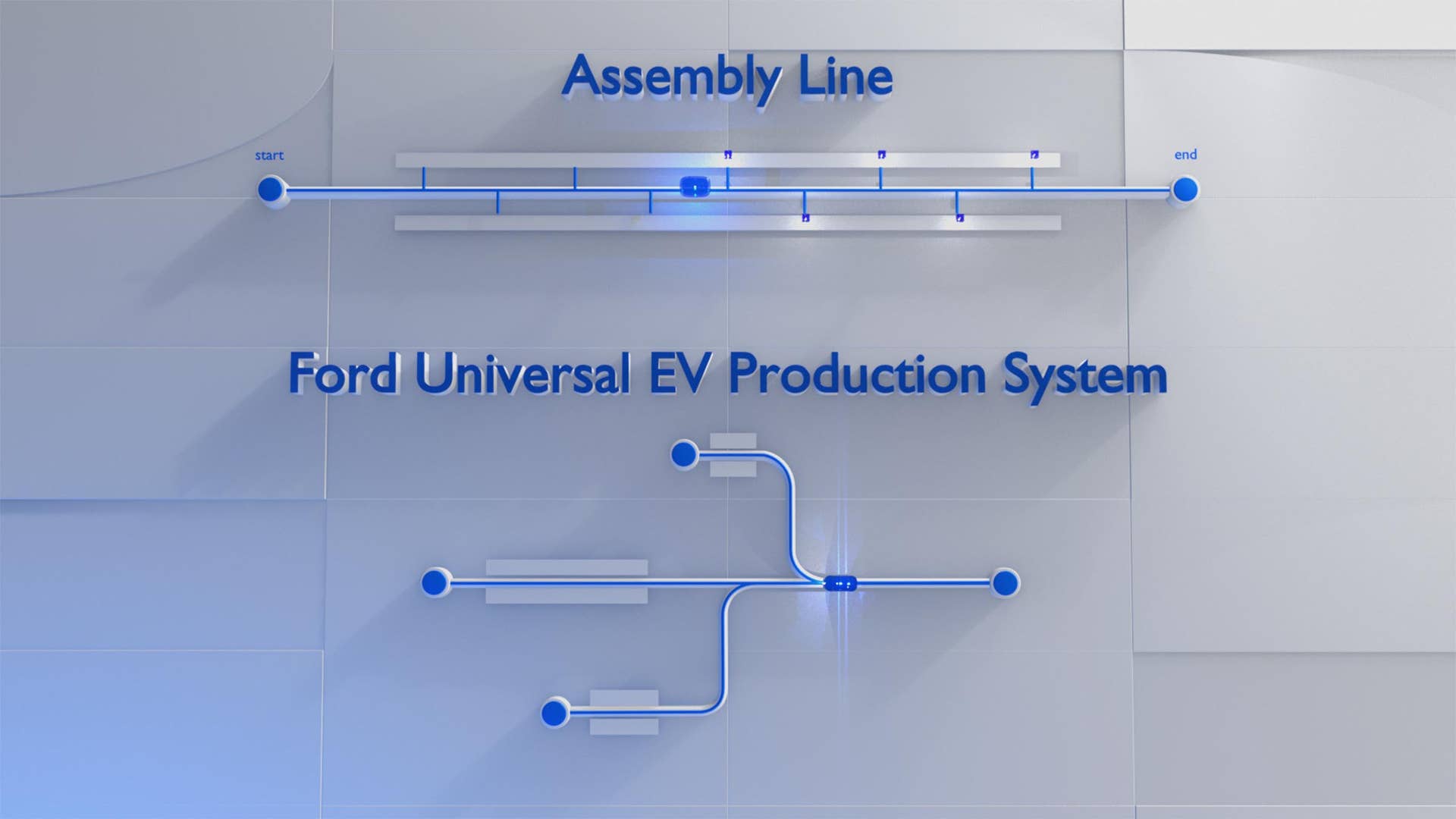
Once a $2 billion makeover is completed at the Kentucky factory, Universal EVs will start out with three parallel lines, one pulling together the vehicle’s back end, another the front, the third putting together the cabin and floor, including the integral battery pack. Much like making a sandwich, those three pieces will be married together near the end of the line.
There are “tens of prototypes” now running around the Long Beach campus and some other Ford locations, according to Clarke. That should grow to hundreds when the Louisville plant gets to try out the new process sometime later this year, with “saleable” vehicles expected to launch sometime in 2026 – though Clarke is notably wary about being too specific with his timetable.
Finding “A Better Way”

The auto industry is facing more turmoil than any time in decades, arguably more than at any time since Henry Ford first rolled out the Model T. Ford, in particular, has a variety of challenges to face. But, like the rest of the traditional industry, it’s also worrying about the prospects of facing a wave of new Chinese automakers already putting the U.S. in a pincer grip as brands like Geely, BYD and Chery expand in Mexico and launch in Canada.
For Ford, it can no longer be business as usual, “We have to ask ourselves is this the way we do things because it’s always been done that way, or is there a better way to do that?” suggested engineer Scott Anderson. On paper, the Universal Vehicle certainly seems like that better way. We’ll have to wait at least another year, however, to see if it works as planned.