What Drivers Need to Know Right Now
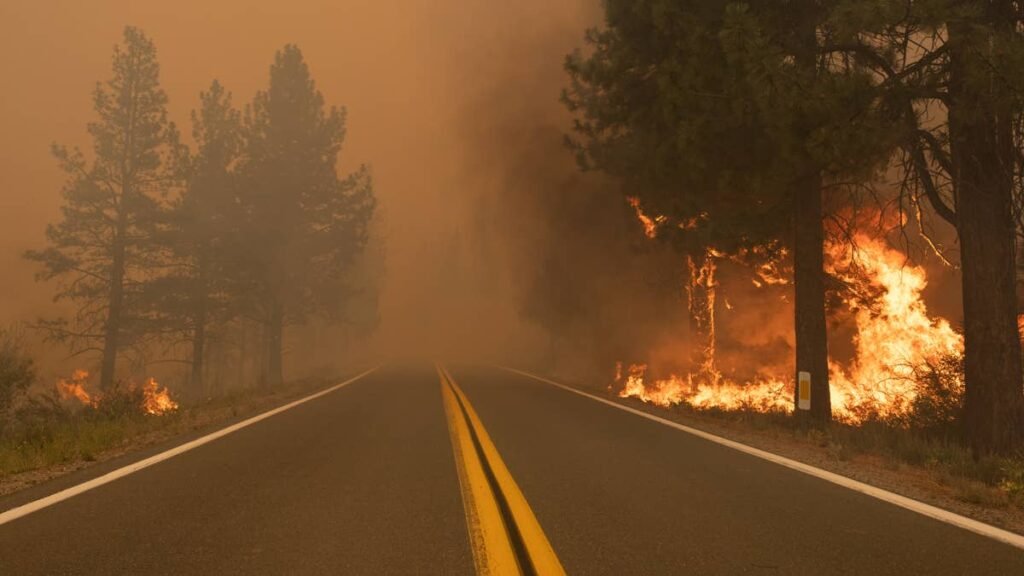
Several fires are burning across southern Florida, and the Florida Highway Patrol is actively monitoring I-75 for smoke.
The most pressing threat for drivers is in Collier County, where the Hilux Fire is burning in Big Cypress National Preserve just north of I-75 and east of State Road 29. The fire, which ignited April 3 near Bear Island Campground, grew to 511 acres with zero percent containment as of this past weekend. According to the National Interagency Fire Center’s April 8 situation report, the Hilux Fire is still showing moderate fire behavior with numerous structures threatened. Firefighters have 75 crew members on scene with four fire engines, five swamp buggies, nine utility terrain vehicles, one air tanker helicopter, two light helicopters, and two water tenders.
The Collier County Sheriff’s Office ordered evacuations at Bear Island, Gator Head, and Pink Jeep campgrounds. An area closure is in effect for all land north of I-75, west of Bundschu Grade, south of the Big Cypress boundary, and east of SR 29. A Temporary Flight Restriction is also in place over the fire area.
The Hilux Fire is burning in the same corner of Big Cypress where the 35,027-acre “National Fire” burned from late February through mid-March. That blaze shut down Alligator Alley multiple times, including a full closure between Exit 80 (SR 29) in Collier County and Exit 23 (US 27) in Broward County. NWS Miami issued warnings that smoke combining with overnight fog could produce near-zero visibility, and several hundred people were evacuated from the surrounding area.
Kristen Brown
Other recent I-75 smoke events:
- April 2: An 80-acre brush fire near the Charlotte-Lee County line sent thick smoke across I-75 near mile marker 150, forcing a northbound lane closure during the afternoon rush.
- March: A wildfire in Columbia County affected visibility near mile marker 425 on I-75, with FHP setting up periodic detours at exits 423 and 427.
- February-March: The National Fire in Big Cypress triggered multiple I-75/Alligator Alley closures, Dense Smoke Advisories, and air quality alerts for Broward and Miami-Dade counties. Smoke drifted as far as Miami Beach.
Beyond I-75, the Sargent Fire on the Florida-Georgia border burned roughly 2,700 acres with overnight road closures on Georgia Highway 94 / Florida Highway 2 due to smoke and fog. That fire reached 50 percent containment as of April 6, though the highway remains on an overnight closure schedule (closed 10 p.m. to 10 a.m.).
Today, the NWS Weather Prediction Center flags critical fire weather concerns for the Florida panhandle and southeastern Georgia, and South Carolina has issued a statewide Red Flag Fire Alert effective this morning.
Key corridors to watch:
- I-75 (Alligator Alley), mile markers 65-85, Collier County: Hilux Fire burning nearby; FHP monitoring. History of repeated shutdowns since February.
- SR 29 and US 41, Collier County: Direct smoke impacts from the Hilux Fire.
- I-75 near mile marker 150, Charlotte County: Site of April 2 smoke-related lane closure.
- I-75 / US 441 near Florida-Georgia border, Baker and Columbia counties: Sargent Fire area; overnight closures still in effect.
Check the Florida 511 travel information system and the AirNow Fire and Smoke Map before departing. Conditions can change rapidly, especially overnight and in early morning hours when smoke settles.
How to Drive Safely Through Wildfire Smoke
Driving through wildfire smoke requires a different approach than driving in rain or fog. Smoke can shift direction suddenly, pool in low-lying areas, and drop from light haze to near-zero visibility in seconds. Florida Highway Patrol has repeatedly issued guidance to drivers this season, and the core advice applies every time conditions deteriorate.
Use low-beam headlights, not high beams. High beams reflect off smoke particles and reduce your visibility further, the same way they behave in fog. Low beams light the road ahead without the blinding reflection. FHP specifically calls this out in every smoke advisory.
Switch your ventilation to recirculate mode. This prevents outside air, and the fine particulate matter in wildfire smoke, from being pulled into your cabin through the fresh air intake. Most vehicles have a recirculate button on the climate controls, usually marked with an icon showing air circling inside the car. Keep the AC running to maintain positive cabin pressure.
Increase your following distance significantly. Smoke density can change without warning, especially near terrain changes and in low-lying areas where it tends to collect. Florida’s flat topography means smoke can blanket an entire stretch of highway with very little warning.
The Ultimate Road Trip Gear Guide If you’re planning a long-distance drive through Florida this spring, packing an emergency kit is essential. Our road trip gear guide covers the basics.
When Will Conditions Improve?
Not soon. Florida’s Agriculture Commissioner has been blunt about the timeline: “The busiest part of the fire season is April, May, and June.” The state’s dry season typically doesn’t end until late May or early June, when a pattern of daily afternoon thunderstorms establishes itself.
For drivers making regular trips on I-75 through Southwest Florida, the best strategy is to assume smoke is possible on any trip and plan accordingly. Bookmark the AirNow Fire and Smoke Map and the Florida 511 system for real-time road conditions.