
A new patent filed by McLaren just feels illegal. The automaker has filed to protect an innovation that adds a new dimension to the launch control system, using similar ideas to improve acceleration and response when a hybrid car is already rolling. You might know similar systems as rolling anti-lag. Why does this feel illegal? Well, if the supercar is on a twisty circuit, there’s no use for the system, so it only seems applicable for straight-line racing, and if you’re drag racing a McLaren, you’re probably starting from a dead stop. If not, it’s most likely that you’re racing on a public freeway. Of course, McLaren will argue that the tech should only be used on a closed course, but if you’re roll racing a McLaren in a competitive event, it’s probably modified and has custom ECU settings for just such an eventuality. Regardless, the innovation is still worth discussing, and since McLaren has a way to prevent reckless driving on public roads, it might not be so bad after all. Let’s take a closer look.
McLaren Develops Anti-Lag for Hybrids
McLaren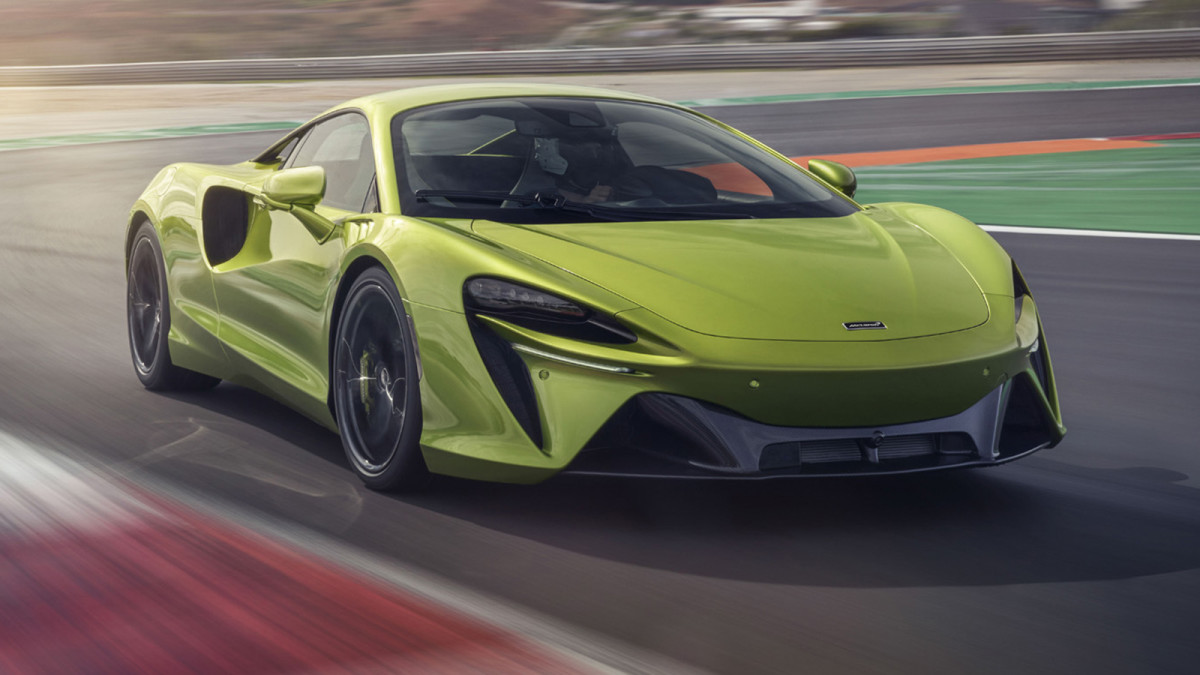
The system’s concept was filed with the United States Patent and Trademark Office and first discovered by CarBuzz, which describes the innovation as little more than a few lines of code used to control electric motors in hybrid vehicles. In a traditional launch control system, the driver holds the brake pedal down while also applying the throttle. Naturally, this is not feasible if the car is already in motion, so instead of using the brakes, this system recognizes when a driver activates the rolling launch (likely with a button on the steering wheel) and uses an electric motor to hold the vehicle at that speed while the driver increases the revs of the engine. According to the patent, the electric motor can maintain speed by applying negaive torque to the output shaft or gearbox, thus counering the positive torque developed by the engine while still allowing the revs to climb to an ideal level. This can be useful on a car with large turbochargers or even a naturally aspirated engine with a steep torque curve. Once the driver is ready to set off, possibly by releasing said button on the steering wheel (JB4 users know exactly how this works), the electric motor stops applying the negative torque. This means minimal lag, if any, in acceleraton.
Stumbling Blocks to McLaren’s Rolling Anti-Lag
Ronan Glon/Autoblog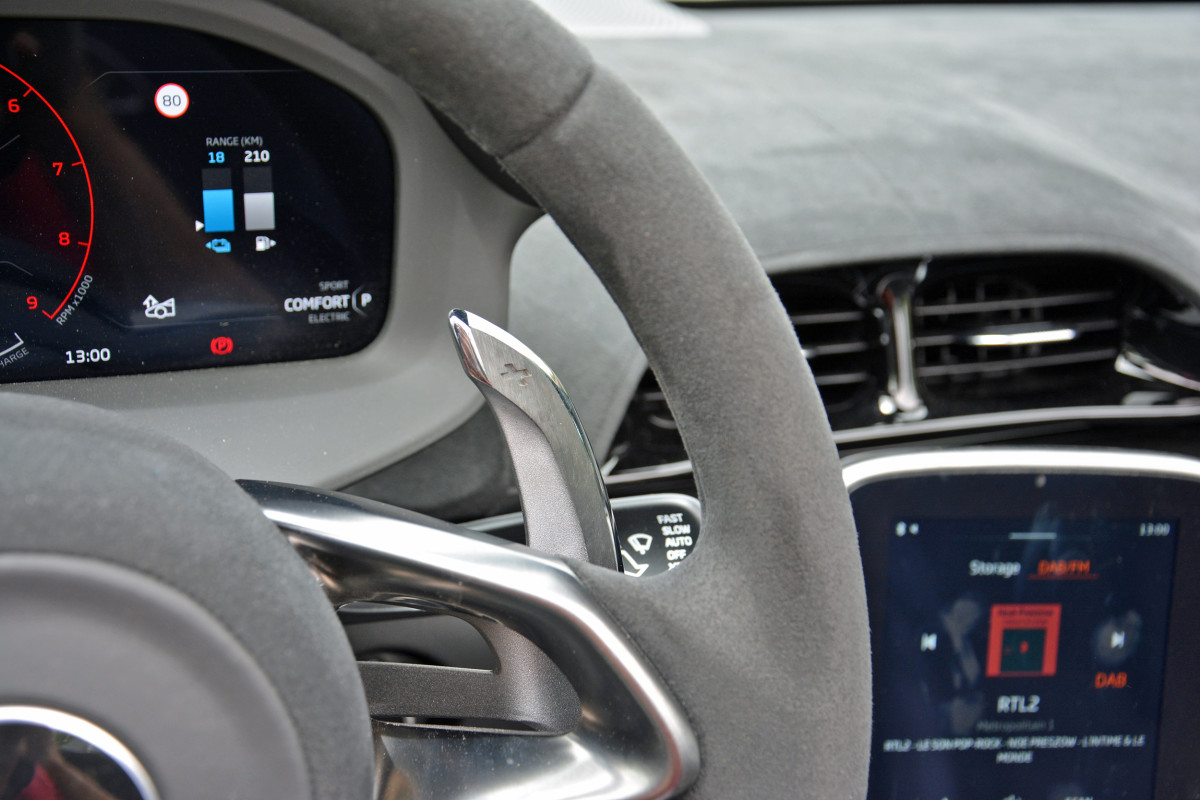
This system clearly adds a layer of complexity that might make production challenging, and those developing the code would need to be cognizant of initiating wheelspin on various surfaces, which would be especially dangerous at higher speeds; in 1st or 2nd gear, it would surely be simpler to just mash the throttle, so this patent appears to be practical only for 3rd gear and higher. A traditional anti-lag system seems more straightforward, but there may be a hidden benefit. With the electric motor developing negative torque, the McLaren of the future may be able to replenish its battery using regeneration more quickly. It seems, then, that McLaren may simply be trying to negate the negative effects of a heavy battery. Still, this is only a patent, and automakers tend to file these for anything they come up with, even if the idea is never intended to reach production.


