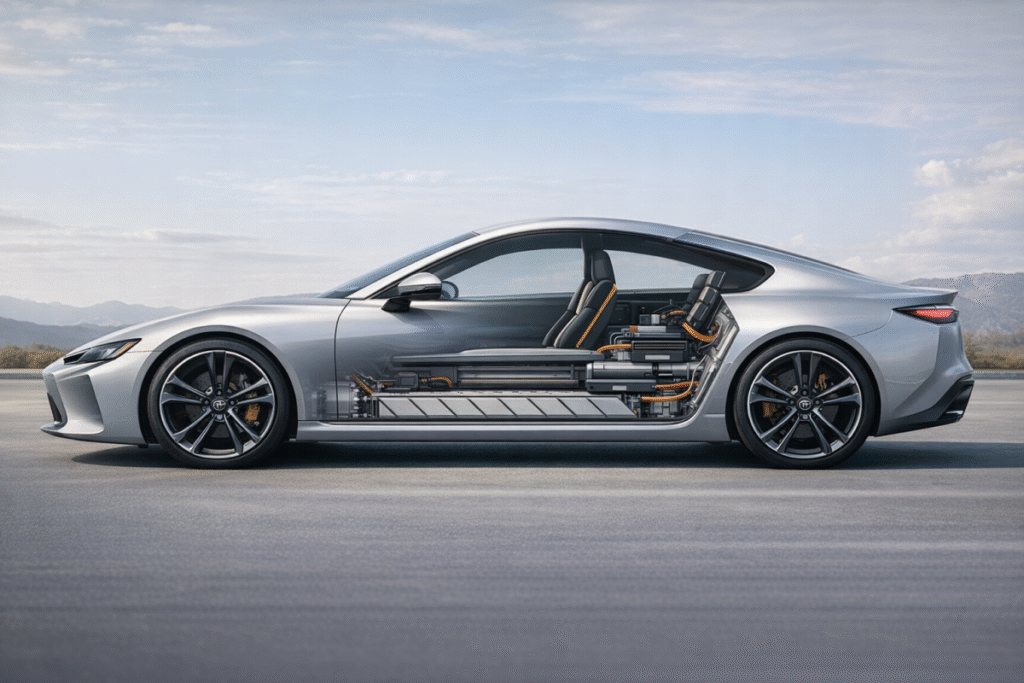
Rethinking EV Packaging, Toyota-style
Toyotararely takes the obvious route when it comes to EVs. While most of the EV world has settled into the standard skateboard layout, Toyota keeps looking for smarter ways to fit batteries, motors, and wiring – without just making cars bigger or heavier.
Earlier, Toyota filed a patent for moving batteries and wiring to free up cabin space and simplify layouts. This time, the focus shifts from space to safety – specifically, what happens to EV batteries in a crash.
Toyota’s latest patent, filed in August 2025 and published just days ago (patent no. 20260054558 if you want to check), takes a different approach to battery protection. Instead of locking the battery down like a solid block, Toyota is asking if letting it move – just a little – could actually make EVs safer in a crash.
Cole Attisha
How a Moving” Battery Could Work
The core idea is to mount the battery into the lower part of the car, but not bolt it down like a structural beam. Instead, the pack sits inside the frame, surrounded by suspension parts and reinforced sections that are meant to handle crash forces.
In a real-world side impact, those suspension and frame components would deform first, absorbing and redirecting energy away from the battery. Rather than taking the hit directly, the battery is allowed a small amount of controlled movement, reducing peak loads that could crack the casing or damage internal cells.
It’s a bit like how crumple zones or breakaway engine mounts work in regular cars. Everything stays solid during normal driving, but in a serious crash, the structure is designed to give way in a controlled fashion. The point isn’t to let the battery bounce around, but to keep crash energy from focusing on one vulnerable – and costly – part.
Toyota’s patent also puts extra attention on side impacts, which have always been tough for EV battery safety because there’s so little space between the door and the battery pack.

Versus Other EVs
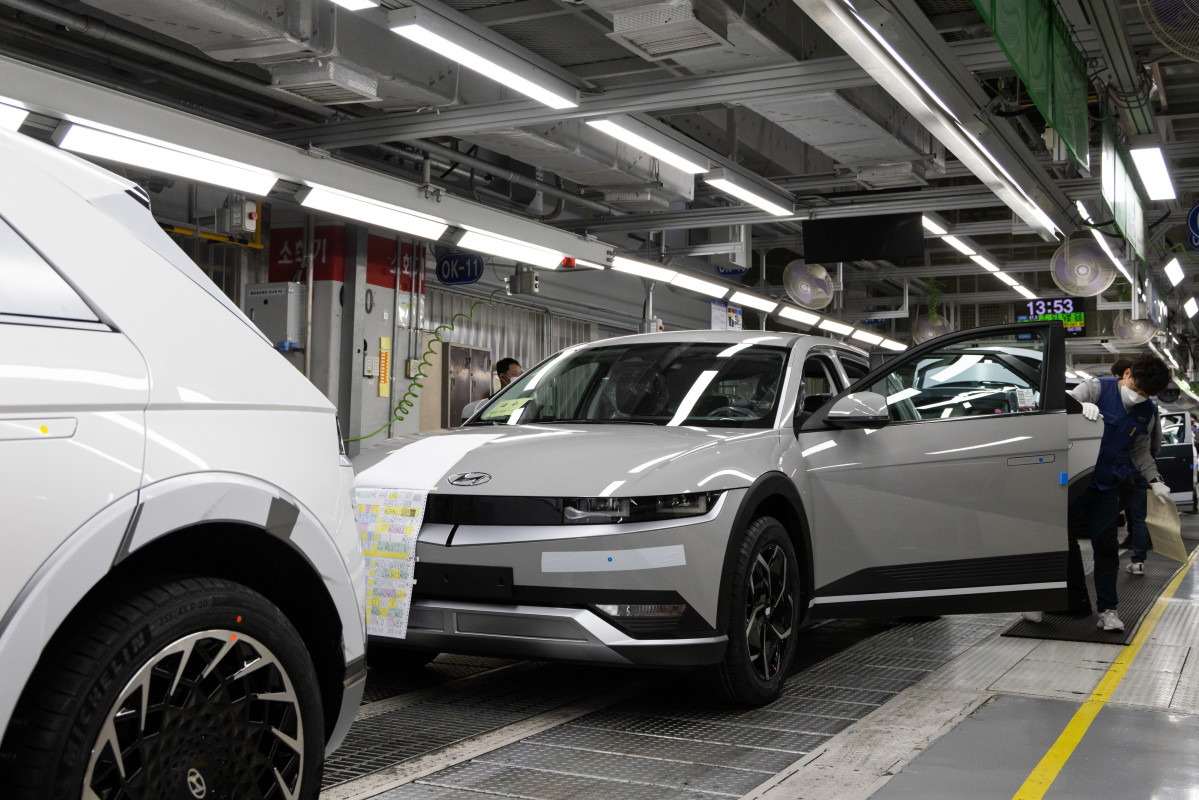
Most EV makers go the other way. Tesla, for example, uses very rigid battery packs that double as part of the car’s structure, counting on stiffness and strong side rails to keep things out. Hyundai’s E-GMP platform relies on reinforced underbodies and fixed battery mounts, focusing on shielding and brute strength.
In contrast, Toyota’s approach focuses on managing crash energy. It’s a more flexible way of thinking, and it could be easier to use across different types of vehicles, not just pure EVs.
Of course, a patent isn’t a promise. Automakers file these to protect ideas, not to guarantee what ends up in showrooms. Designs change, budgets get in the way, and rules shift. So there’s no guarantee we’ll see moving battery packs in future Toyotas, but this does show how the company is thinking about EV safety beyond the usual answers.
Getty Images