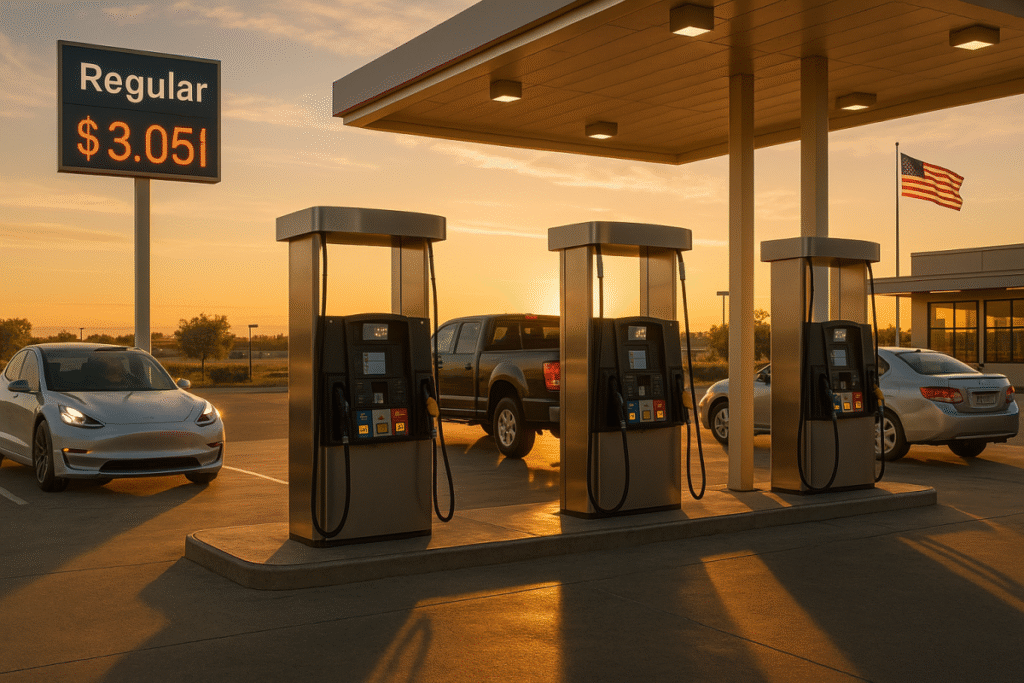
If you’ve driven across the border from St. Louis into Illinois or crossed into the state from Wisconsin, you’ve likely felt the immediate, painful sting of a price hike at the pump. As of mid-February 2026, the national average for a gallon of regular unleaded is hovering around $2.92, but Illinois remains a stubborn outlier. Several data points push the state’s average closer to $3.01, while neighboring states like Missouri and Iowa have prices as low as $2.53 recently. It’s a persistent issue for Illinois drivers.
This pricing disparity isn’t just a fluke of the market or a result of you visiting a station with unusually high gas prices. It is the result of a complex, layered system of taxation and regulation that makes Illinois one of the most expensive places in the Midwest to fuel up. Here’s what’s going on in Illinois – not just Chicago.
The automatic annual excise tax increase
Illinois residents are currently dealing with a gas tax structure that is designed to go up, and only up. In 2019, the state’s motor fuel tax doubled to 38 cents per gallon; the real kicker was a provision that ties future tax increases to the Consumer Price Index. As of January 1, 2026, the gas excise tax sits at roughly 48 cents per gallon, a figure that automatically adjusts every July 1st without requiring a new vote from the legislature.
This approach to taxation means that even when global oil prices stabilize, Illinois drivers face a rising floor for what they pay. While neighboring states like Missouri and Indiana have also adjusted their taxes to fund infrastructure, neither raises prices as high or as often as Illinois. This predictable upward trend ensures that Illinois remains among the three most-taxed states for fuel in the nation.
Illinois taxes its taxes
Unlike most states that charge a flat excise tax per gallon, Illinois is one of only a handful of states that apply a percentage-based sales tax on top of the fuel price. This creates a “tax on a tax” situation where the state’s 6.25% sales tax is calculated after federal and state excise taxes have already been added to the base cost of the gasoline. When gas prices rise globally, the amount of sales tax you pay in Illinois increases proportionally, compounding the pain at the pump.
This fiscal structure turns high gas prices into a windfall for the state’s general fund while punishing consumers twice. In states like Iowa or Wisconsin, a spike in crude oil prices affects only the product’s base price; in Illinois, it triggers a higher tax per gallon. This explains why, during periods of market volatility, the price gap between Illinois and its neighbors often widens significantly.
Related: These 9 states have the cheapest gas in the United States
County and city surcharges
If you’re filling up in Cook County or within Chicago city limits, the state-level taxes are only the beginning of the story. Cook County adds its own 1.75% surcharge, and the City of Chicago tacks on an additional per-gallon charge. By the time you’ve paid the federal government, the state of Illinois, the county, and the city, up to 90 cents of every gallon’s price is composed of taxes and fees rather than the actual fuel.
These local add-ons are meant to fund public transit and local infrastructure, but also create massive regional price swings within the state. Drivers in the Chicago suburbs often see prices up to 60 cents higher than in rural downstate counties.
Stringent environmental fuel standards
Northern Illinois, specifically the Chicago and Metro East areas, is subject to federal and state clean air mandates that require the use of reformulated gasoline (RFG). This specific “summer” blend is designed to burn cleaner and reduce smog-forming emissions in warmer months. However, producing RFG is more expensive than the “conventional” gasoline used in the vast majority of Missouri, Iowa, and Indiana, adding an estimated 15 to 20 cents per gallon to the cost. (Californians know this pain all too well.)
Because RFG is a niche product produced by a limited number of refineries, any supply disruption feels like a localized catastrophe. When a refinery in the Midwest goes offline for maintenance, standard gas used in neighboring states can be easily diverted from other regions. Illinois drivers, however, are often stuck waiting for RFG to arrive, leading to localized price spikes that their neighbors simply don’t experience.
Brandon Bell/Getty Images
Supply chain and refinery issues hurt, too
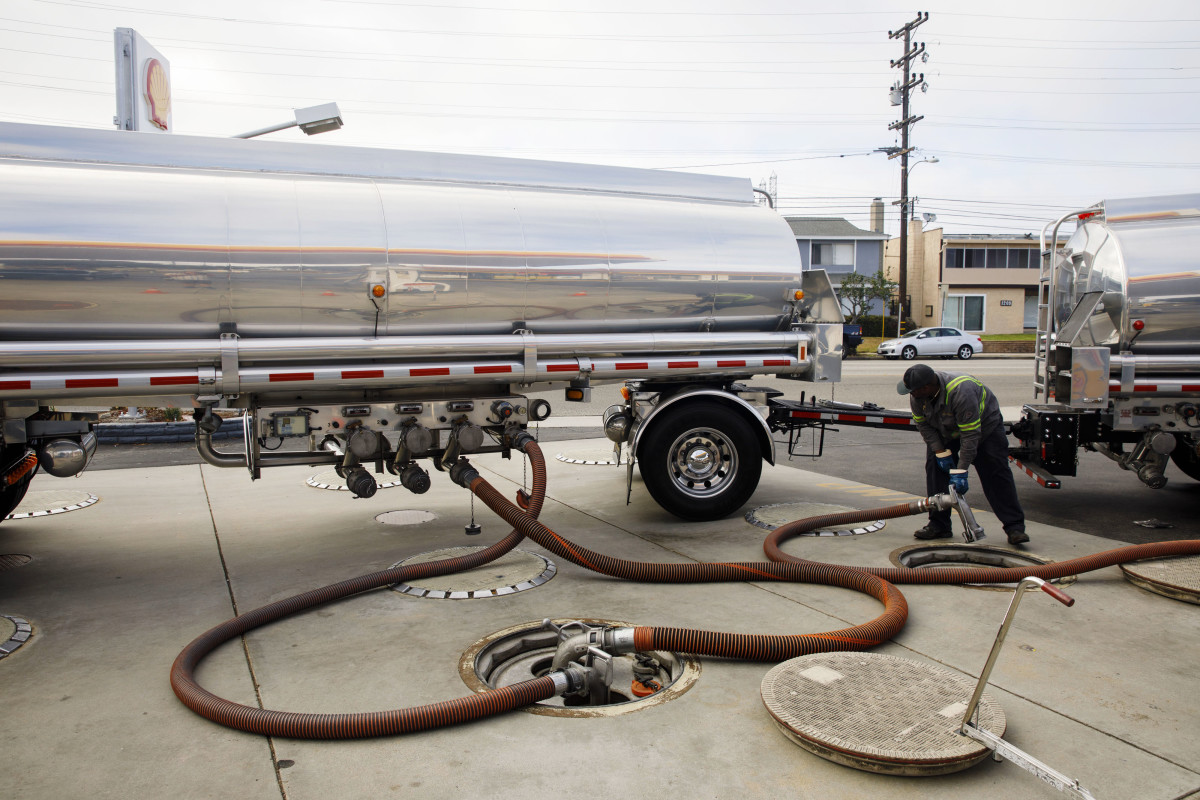
While Illinois is home to several major refineries, including facilities in Joliet and Wood River, the state’s fuel infrastructure is highly specialized. Much of the state’s supply depends on the BP Whiting refinery just across the border in Indiana, the largest in the Midwest. When Whiting or other local facilities experience “unplanned maintenance” or operational hiccups, the supply of Illinois-compliant fuel drops sharply, and prices skyrocket almost instantly.
While Missouri can pull from a wider array of Gulf Coast supplies, Illinois is often a captive market for local refiners. This lack of flexibility in the supply chain, combined with high demand in the Chicago metro area, gives retailers little incentive to lower prices, as they know consumers have few other options for compliant fuel.
Disclaimer: All prices cited in this article are based on publicly available user-generated feedback. Gas stations do not provide daily reports on gas prices, and prices can change at any time. Autoblog is not responsible for the accuracy of pricing listed with user-generated reporting.
Related: These 4 states are paying the most for gas today – here’s why