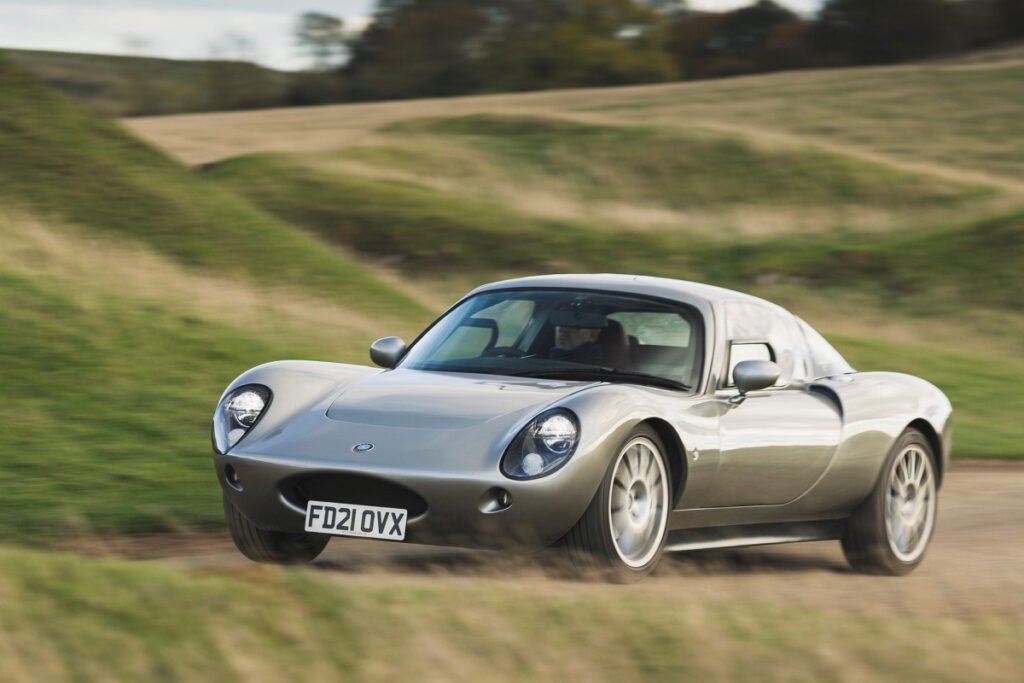
As EV Demand Softens, Wells Bets Bigger on Throwback Sports Car
While several mainstream automakers recalibrate electric vehicle production amid cooling demand, small British manufacturer Wells Motor Cars is heading in the opposite direction. The Warwickshire-based startup has confirmed to Autocar that it will ramp up production of its featherweight Vertige sports coupe to 12 cars in 2026, before doubling output to 24 units in 2027. For a hand-built, niche performance car, that represents a meaningful expansion.
The Vertige first appeared at the 2021 Goodwood Festival of Speed as founder Robin Wells’ interpretation of a modern, back-to-basics sports car. Limited Founders Edition production began in 2023. Each example is assembled by hand in England with an almost entirely British supply chain. Wells’ intent is clear: scale cautiously, preserve craftsmanship, and meet demand without diluting exclusivity.
Wells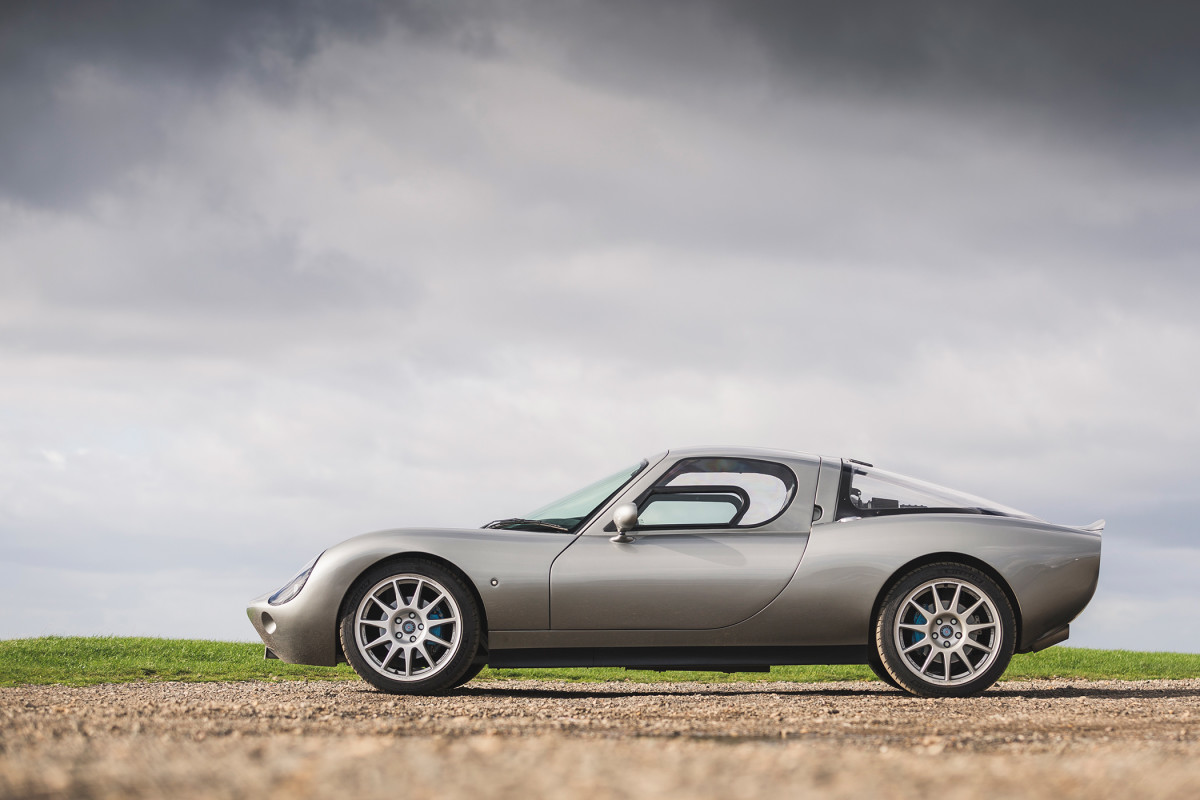
The Lightweight Vertige: Compact, Analog, and Unapologetically Focused
At under 1,870 pounds dry, the mid-engined Vertige is engineered around minimal mass, powered by a naturally aspirated 2.5-liter Ford Duratec four-cylinder making up to 250 horsepower, paired with a six-speed manual, individual throttle bodies, and unassisted rack-and-pinion steering for a pure, analog driving experience. Its modular chassis uses a central tub with detachable front and rear subframes and delivers a claimed 34,700 lb-ft per degree of torsional stiffness, complemented by double wishbone suspension at all four corners and 11-inch ventilated brake rotors with four-piston calipers.
Measuring just under 13 feet long and 5.7 feet wide, with dihedral doors that extend only about 1.6 inches beyond the body when opened, the Vertige remains compact yet usable, offering approximately 7 cubic feet of rear cargo space, an optional 2.3 cubic-foot front trunk, and a 13.2-gallon fuel tank for legitimate long-distance capability.
Inside, Wells blends traditional craftsmanship with essential modern tech. Analog gauges move with the adjustable steering column, and a discreet 7-inch touchscreen supports Apple CarPlay and Android Auto. Hand-stitched Scottish leather, Alcantara trim, and a wooden gearknob carved from a single block of sustainably sourced wood elevate the cabin.
In today’s sports car landscape, where even compact ICE coupes have grown heavier and more complex, and electric performance cars routinely exceed 2,000 lbs. Even as the Miata easily surpasses that, the Vertige occupies a distinct niche. It offers a lightweight, naturally aspirated alternative that aligns more closely with classic Lotus minimalism than with contemporary, tech-laden grand tourers.
Wells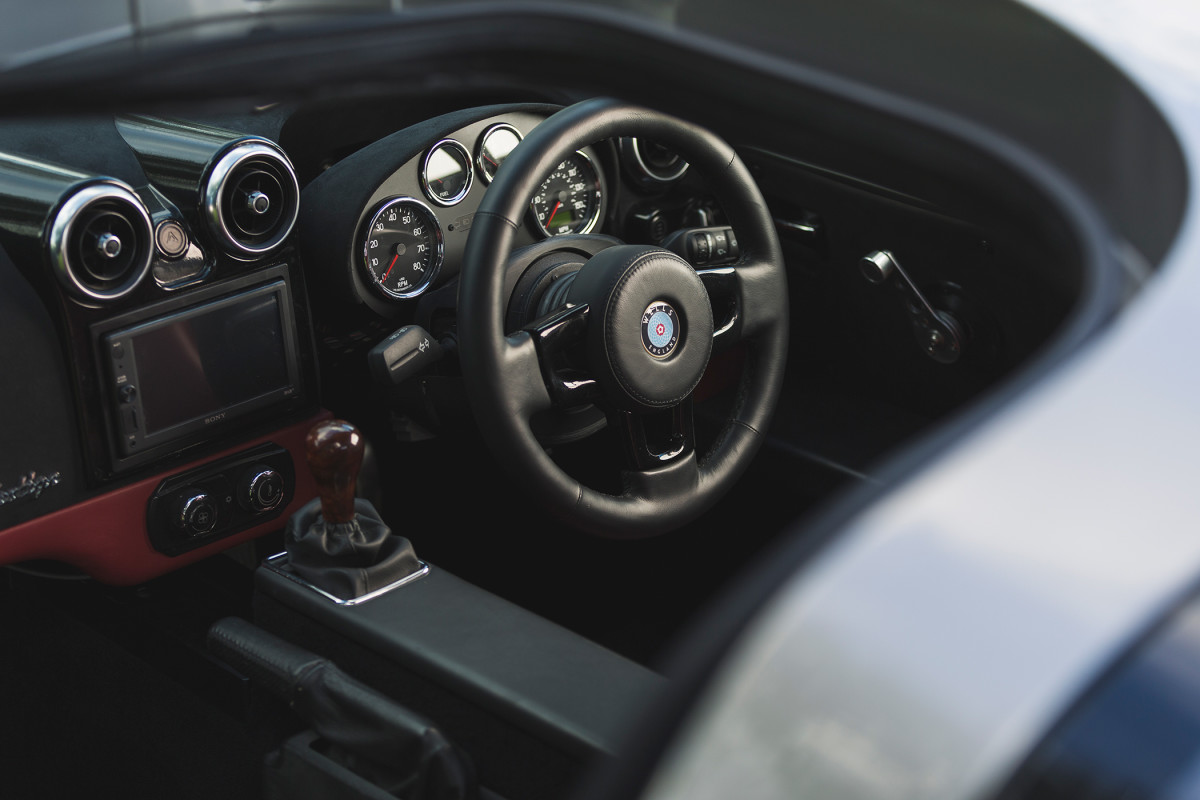
Internal Combustion’s Last Stand Looks Very Alive
Wells’ production increase may be modest in absolute terms, but symbolically it matters. In an era dominated by battery density and software-defined platforms, the Vertige champions mechanical tactility. Its unassisted steering, linear throttle response, and structural rigidity aim to reconnect driver and machine without algorithmic filtering.
Internal combustion is evolving under regulatory pressure, yet cars like the Vertige demonstrate that demand for lightweight, driver-focused ICE machines persists. For enthusiasts fatigued by screens and synthetic soundtracks, Wells offers something elemental. As larger manufacturers hedge their bets, this small British outfit is doubling down on the proposition that simplicity, low mass, and a naturally aspirated engine still resonate deeply in 2026.
Wells