What Is It?
Electric performance cars are everywhere now, but electric roadsters? That list is basically empty. Tesla has been teasing its next-gen Roadster for years, but it has yet to materialize as a model anyone can buy. Right now, if you want a real, buyable, open-top EV two-seat sports car, there’s exactly one answer.
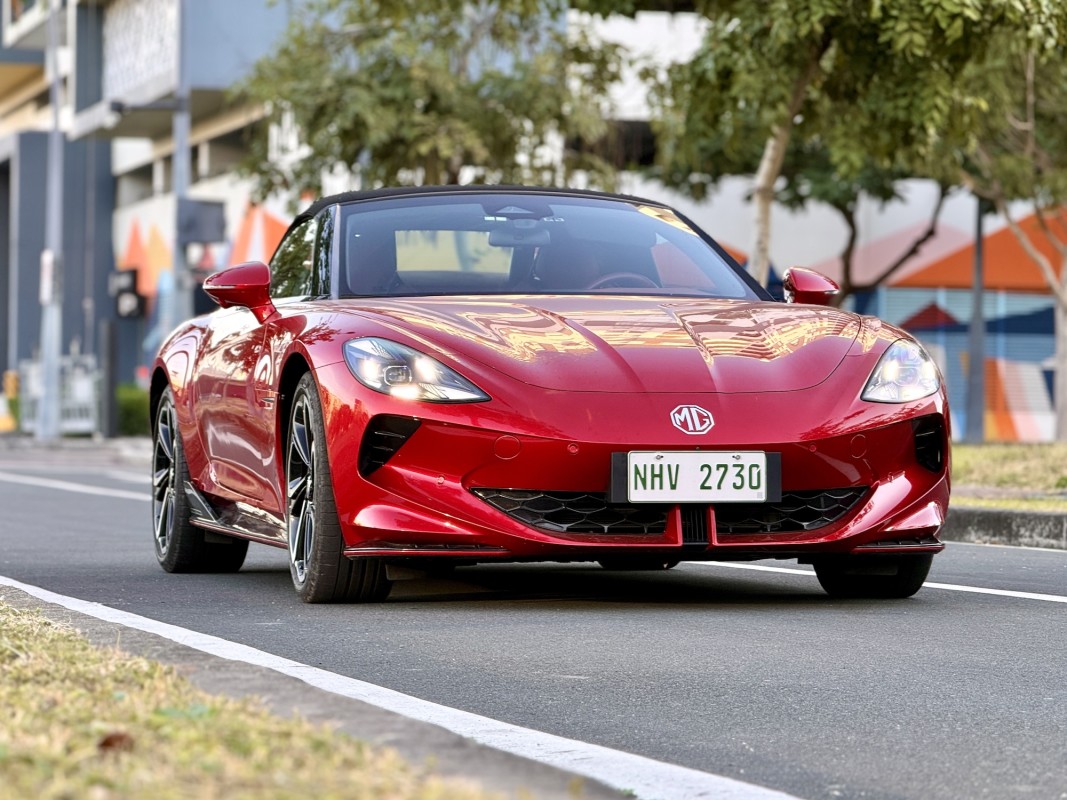
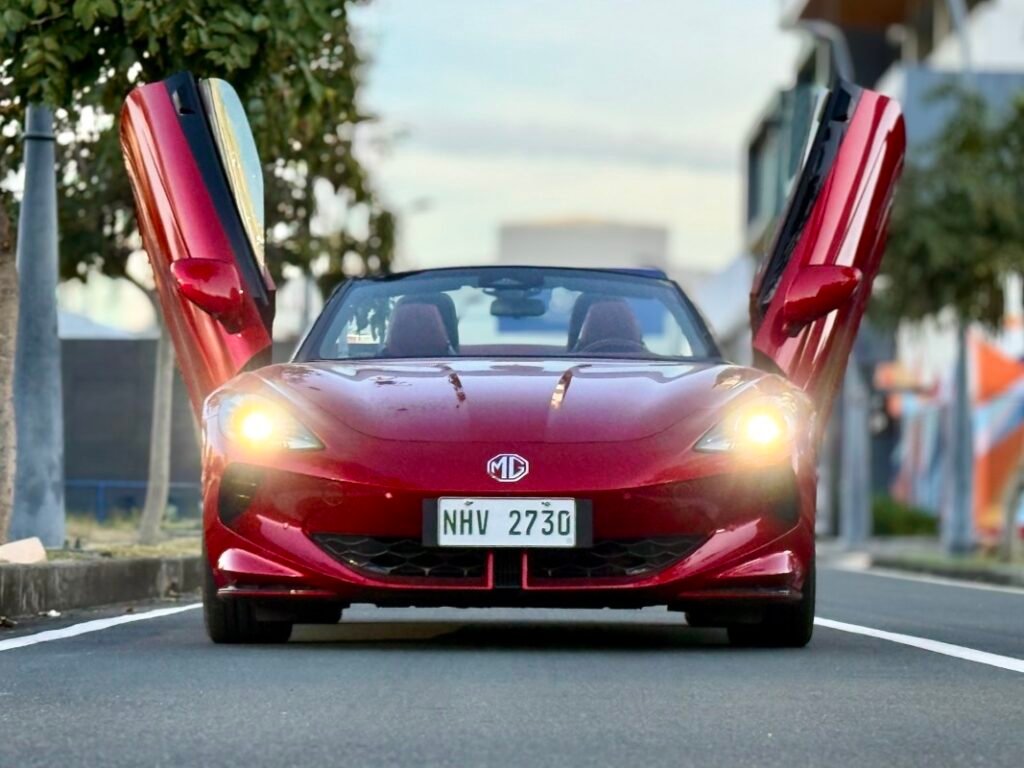
This is the MG Cyberster. I spent time behind the wheel, and it’s one of the more interesting EVs I’ve driven – not because it’s perfect, but because it tries something genuinely different in a market full of samey electric crossovers.
Before we get into it, one important caveat for American readers: you can’t buy this car in the US – at least not yet. Following its global debut in 2022, it is now available in Europe and Asia. Still, as a glimpse of where EV sports cars could be heading, the Cyberster is worth paying attention to.
Jacob Oliva/Autoblog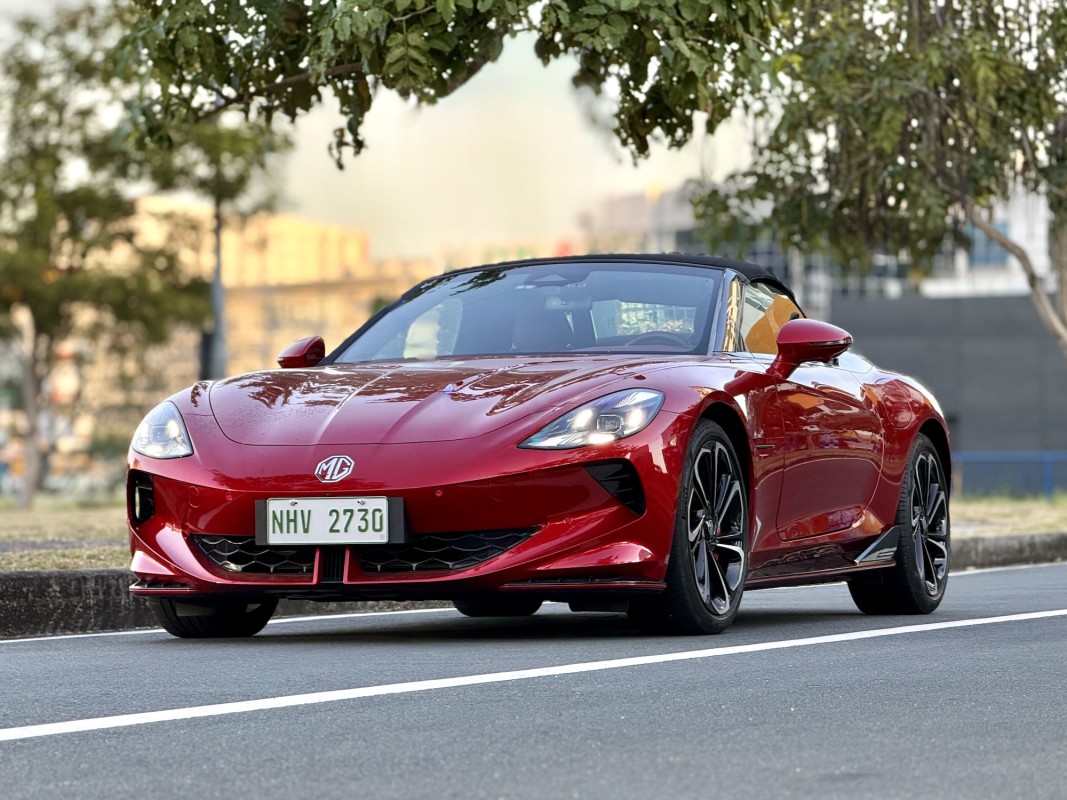
The Cyberster is MG’s first fully electric sports car and its boldest statement since the brand was reborn under China’s SAIC. Historically, MG built lightweight, affordable British roadsters. The Cyberster doesn’t pretend to be that. Instead, it’s a modern electric grand tourer that borrows the idea of an MG roadster – two seats, rear-drive proportions, open top – and filters it through a very 2020s, very tech-heavy lens.
It looks like a concept car because, frankly, it kind of is. Scissor doors, dramatic surfacing, a wide stance, and a cabin dominated by screens all signal that MG wasn’t aiming for subtlety. This is a car designed to stop people mid-scroll on Instagram and mid-step in parking lots.
And it does. Everywhere.
Jacob Oliva/Autoblog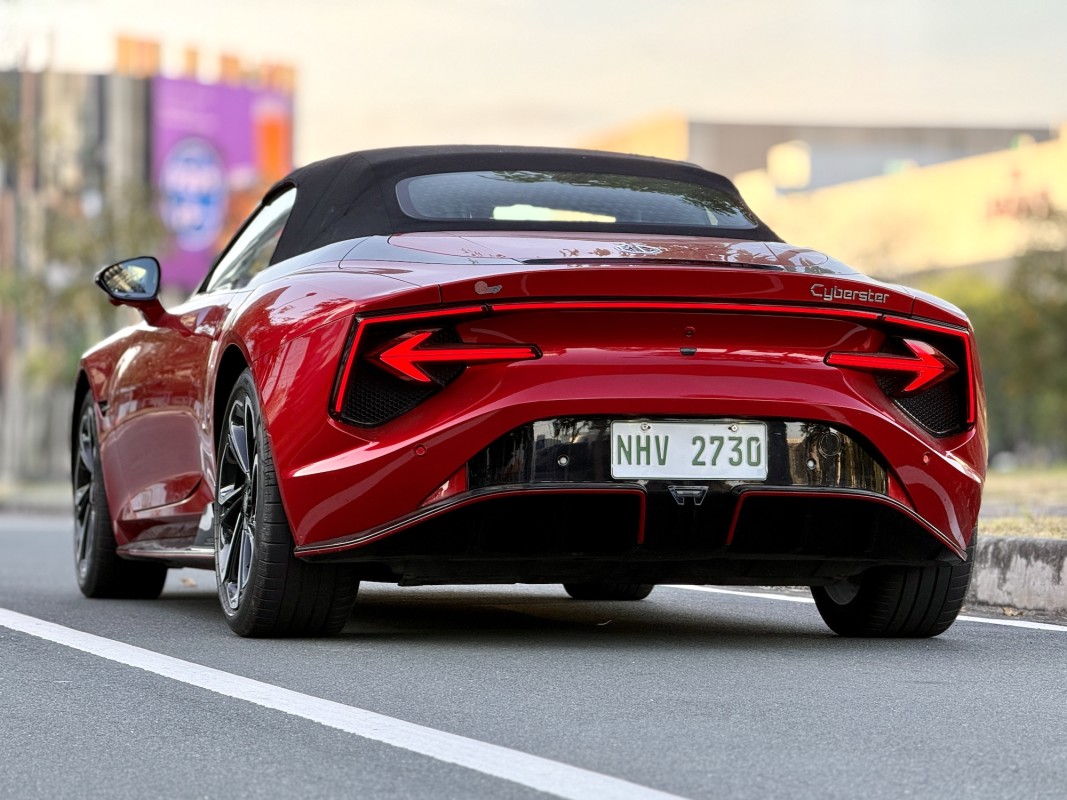
The Specs
Underneath the dramatic bodywork, the Cyberster runs a dual-motor all-wheel-drive setup paired with a 77 kWh lithium-ion battery. Combined output sits at 536 horsepower and 535 lb-ft of torque, which explains why the car feels genuinely fast the moment you press the accelerator. MG claims a 0-62 mph time of around 3.2 seconds, and based on real-world experience, that figure feels entirely believable.
The weight is where things change. At about 4,376 pounds, the Cyberster is much heavier than classic roadsters, and you feel that in how it drives. It’s also bigger than a Miata, measuring 178.5 inches long and 75.3 inches wide, with a 105.9-inch wheelbase. Even so, it doesn’t feel bulky or hard to handle from the driver’s seat.
A smart feature is the selectable two-wheel-drive mode, which disconnects the front motor. In places where you don’t need all-wheel drive, this helps save energy and still gives you plenty of performance for daily use. It’s the setting you’ll probably use most often.
Official range is about 313 miles, but in real-world driving – especially in AWD mode – it’s closer to 250 miles. If you switch to 2WD and drive more gently, you’ll see better efficiency. Charging depends on the market and spec. The car I drove only had a GBT port and no fast charging, but MG says customer cars get Type 2 AC and DC fast charging, so a 10 to 80 percent charge takes about 38 minutes on a 150 kW charger. Depends on the market, I guess.
Jacob Oliva/Autoblog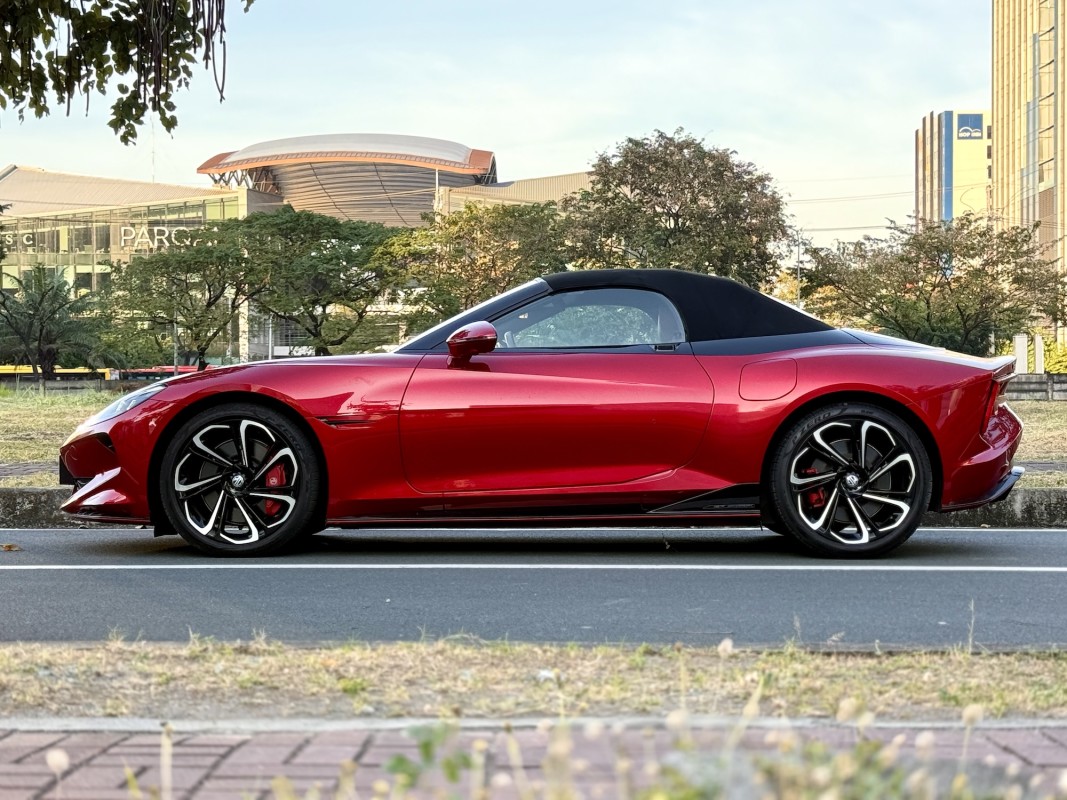
What’s It Like?
The Cyberster looks expensive, dramatic, and unapologetically flashy. The scissor doors are the obvious party trick, but they’re not just for show – there are built-in sensors to prevent you from opening them into obstacles. The downside is that those sensors are very cautious. Park on a sideways incline, and the doors refuse to open entirely unless you’re on flat ground. Clever, but occasionally annoying.
Now, the soft top is excellent. It opens or closes in about 10 seconds and can be operated at speeds up to roughly 31 mph. If rain suddenly hits while you’re moving, you don’t need to pull over or crawl to a stop. That’s a genuinely useful feature.
Despite its dimensions, the Cyberster doesn’t feel huge from the driver’s seat. The hood is long, yes, but the car shrinks around you once you’re moving, especially in city driving. One nitpick, though – arrowheads for turn signals do look as corny as this car’s name, but it has its charm (according to some strangers who found it cool).
Jacob Oliva/Autoblog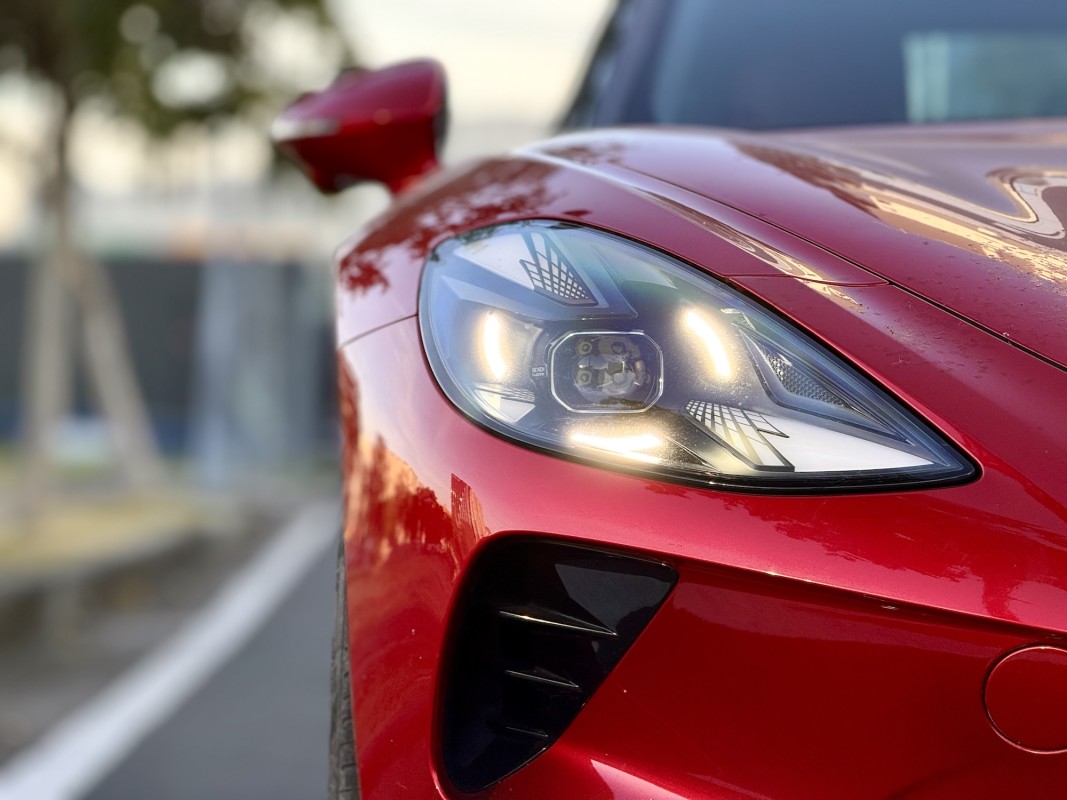
Inside, the Cyberster is all about screens. There’s a curved, driver-focused display with a 10.25-inch digital cluster and two 7-inch side screens. There’s also a fourth screen for settings and HVAC controls. All these screens are powered by Qualcomm hardware and Unreal Engine graphics. The visuals are sharp and quick to respond, but all those screens pick up fingerprints fast. You’ll be wiping them down often.
The red leather interior looks upscale, though not everyone will like it. Storage is decent for a roadster: you get door bins, a center console, cupholders, and a small space behind the seats. The trunk is there, but it’s tight, and the opening to the cabin storage is smaller than it looks from the outside.
One surprising miss at this price point: no auto-hold function. In heavy traffic or long stoplights, especially with button-based gear selection, it’s something you really feel the absence of. It does have Adaptive Cruise Control, but it’s not as refined and advanced as what other automakers offer, so there’s that.
Jacob Oliva/Autoblog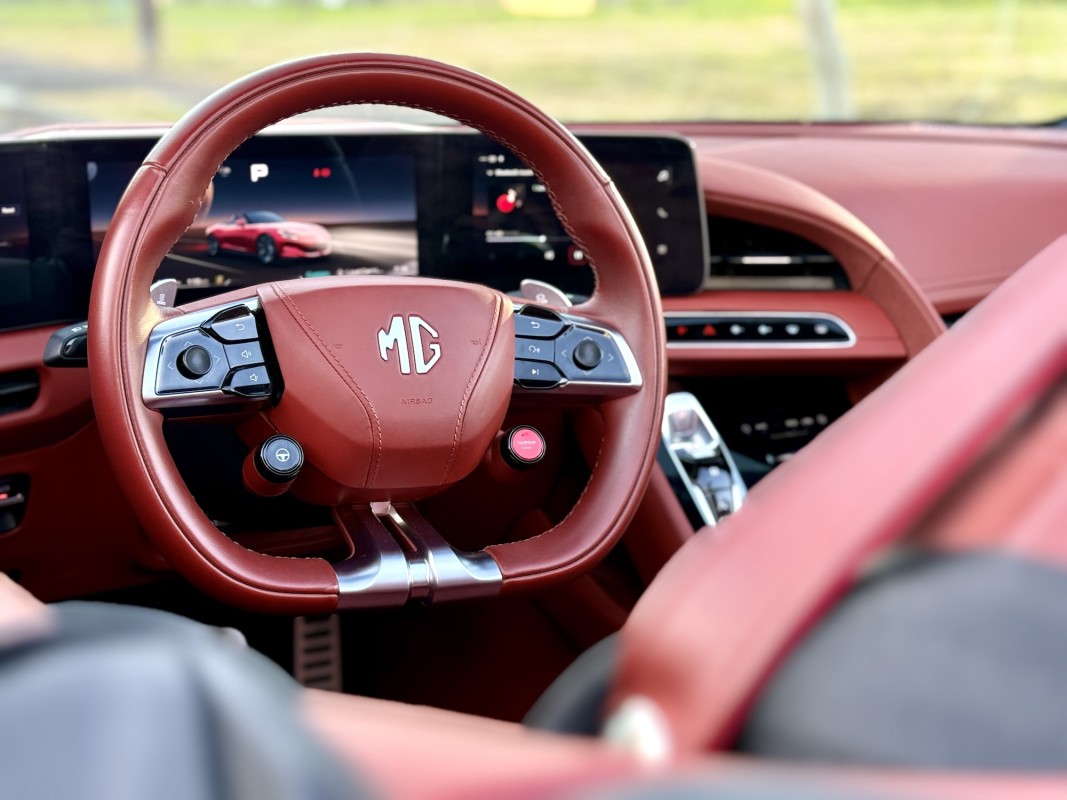
In a straight line, the Cyberster is genuinely quick, but not as quick as you’d be switching off its artificial sound in the cabin, with a choice between a combustion engine and sci-fi. They just sound too cringey, at best.
The steering lets you adjust weight, but feedback is limited. It’s accurate enough, but it doesn’t talk to you the way a true sports car does. This is where the Cyberster shows its grand touring bias.
Ride quality is on the softer side, and that’s intentional. The suspension prioritizes comfort over razor-sharp handling. On highways, it’s almost excellent – stable and genuinely relaxing for a convertible, though I wish it were a little quieter. Then again, it’s a soft-top, so that’s a given. On twisty roads, the weight becomes apparent. It’s fun, but it’s not playful in the way lighter roadsters are.
Efficiency depends heavily on how you drive. In AWD mode, the range drops quickly if you lean on the performance. Switch to 2WD, and things improve noticeably, making it the mode you’ll likely use most of the time.
Jacob Oliva/Autoblog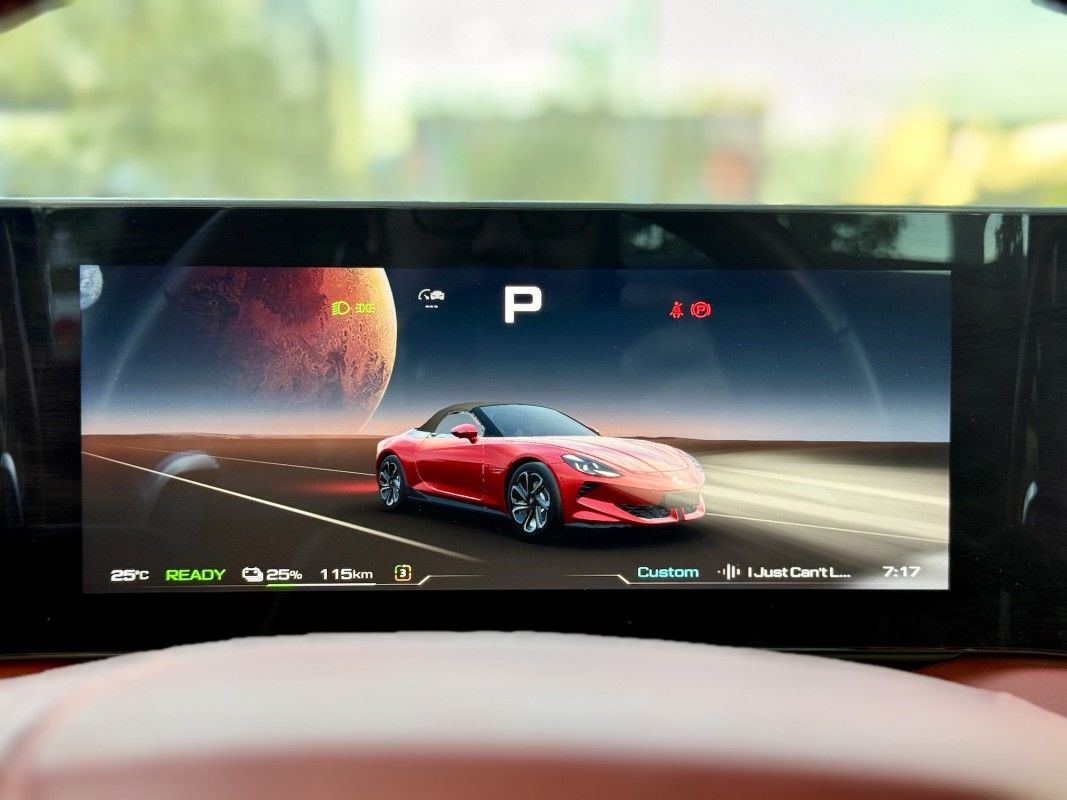
Verdict
The MG Cyberster is a unique car that does not fit neatly into any category. It is not a lightweight purist’s roadster or a dedicated track car, but it is a fast, open-top EV with character. As tested, the sole Cyberster variant in the Philippines is priced at P4.5 million, which converts to about $80,000 to $85,000.
At that kind of figure, you’re not just competing with warmed-over crossovers; you’re in the territory of well-equipped sporty EVs and performance cars. For that money in the US, you might be weighing things like a Mustang Mach-E GT, a Hyundai Ioniq 5 N, or even lightly used Porsche 718s. None of those are open-top electric sports cars, though – which is the Cyberster’s real claim to fame.
The closest competitor, however, is the Maserati GranCabrio Folgore, but that’s a 2+2 electric roadster priced at a staggering $121,700, with deep discounts already factored in.
Sure, the Cyberster has compromises, but what it does have is presence, pace, and an open-air driving experience that electric cars have largely ignored.
The Cyberster isn’t perfect, and that’s part of what makes it interesting. For now, before the long-promised Tesla Roadster becomes a reality, the MG Cyberster stands alone as proof that electric sports cars can be bold, emotional, and genuinely fun.
Jacob Oliva/Autoblog