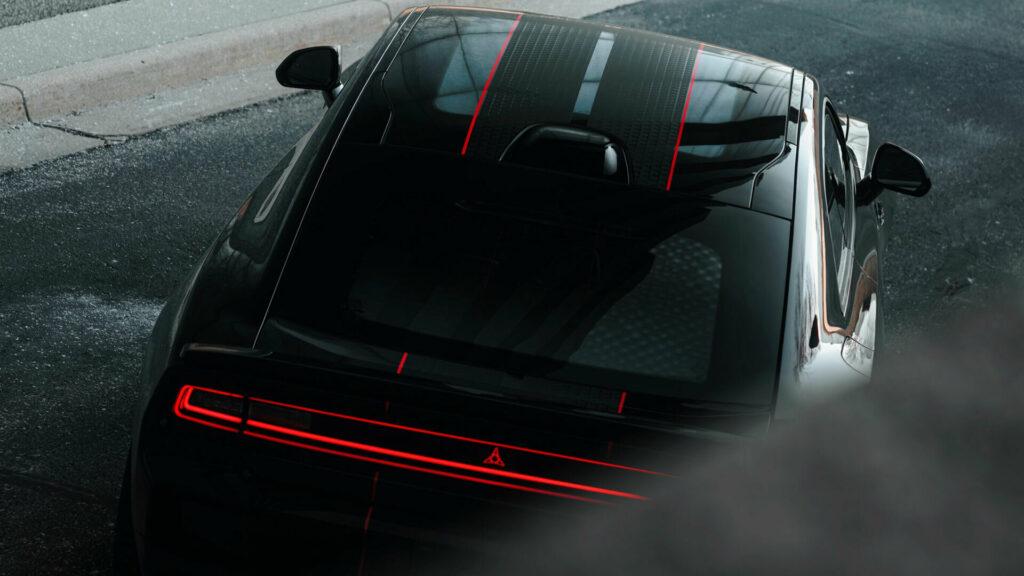
- Dodge introduced two new personalization options for Sixpack.
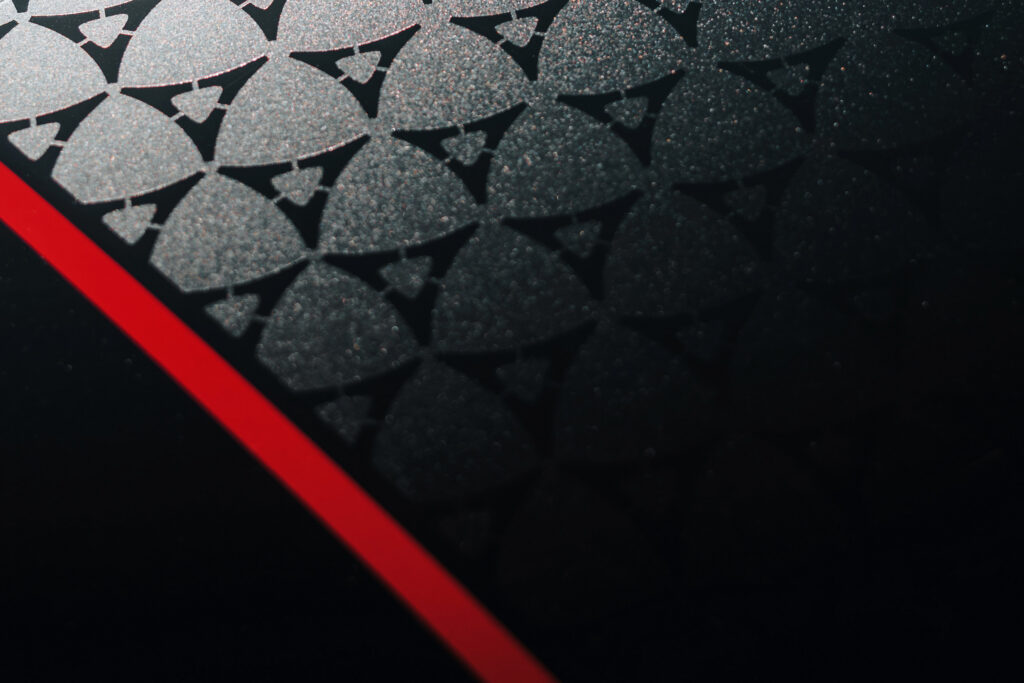
- Stripes show Fratzog pattern inside cars with glass roofs.
- Additional Sixpack customization options are in development.
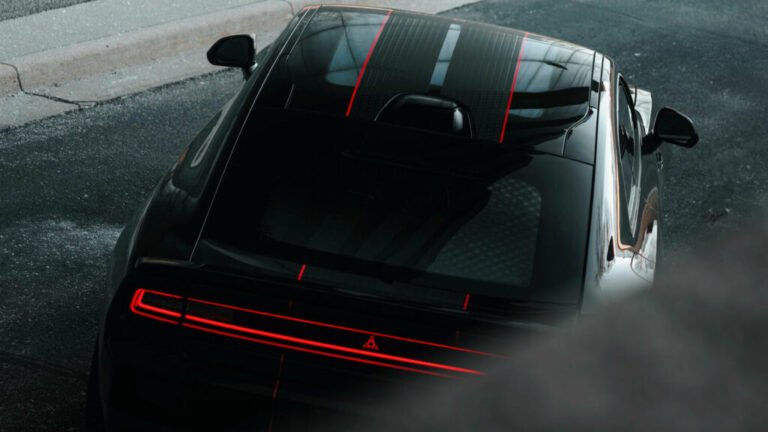
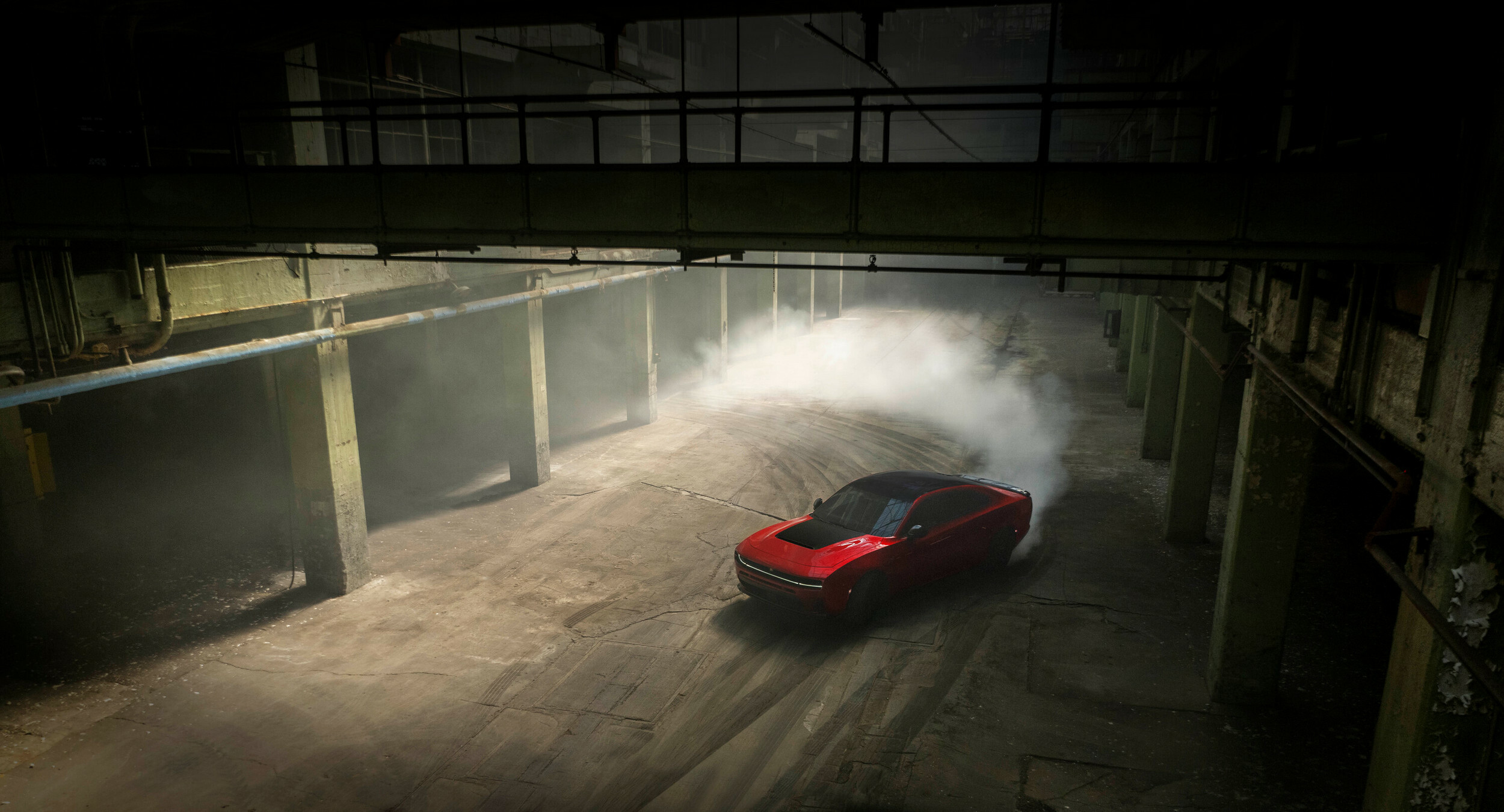
Last year, Dodge used Spring Fest to introduce a customized Charger Daytona with matte black stripes and red edging as well as Fratzog logos.
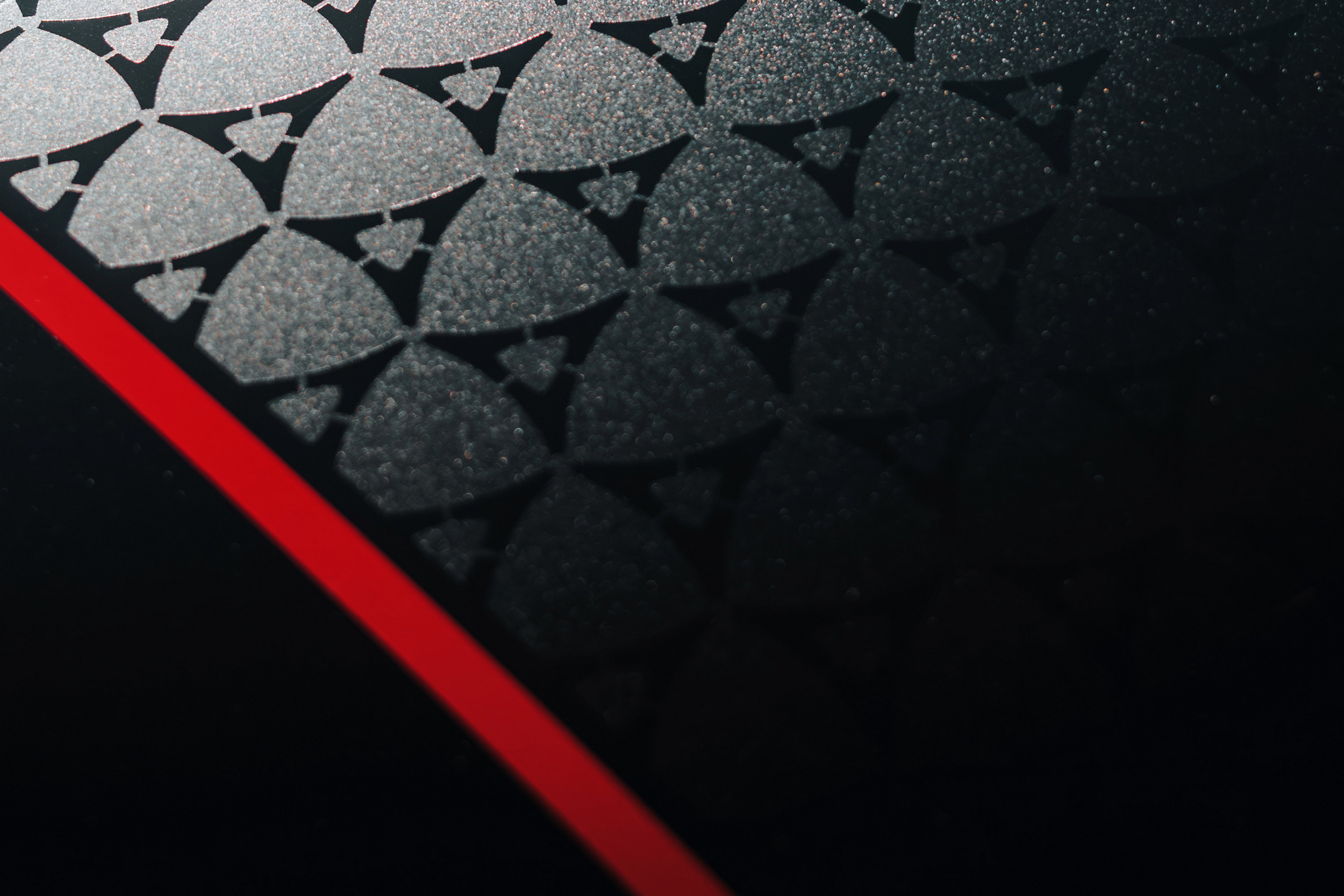
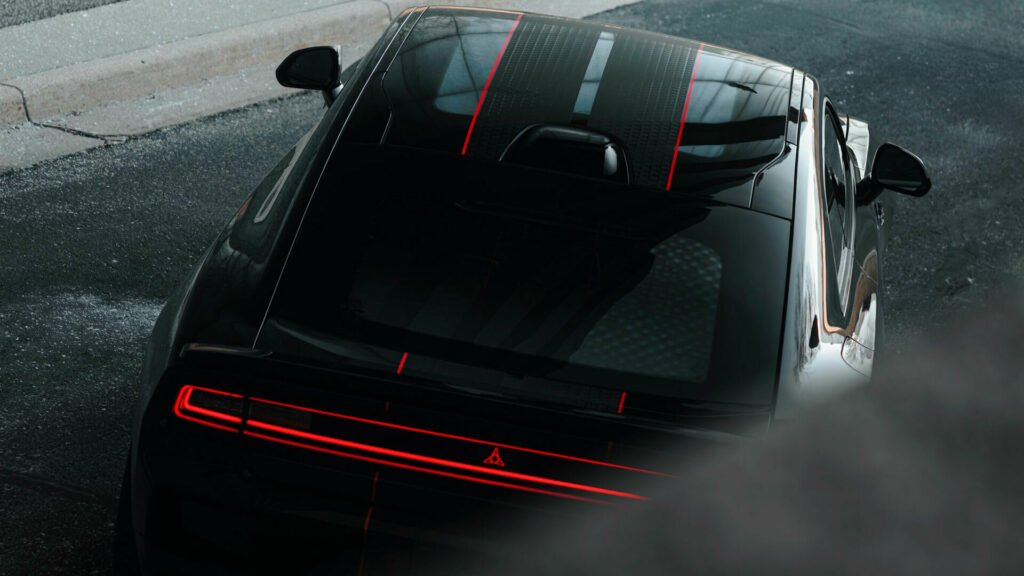
The stripes eventually debuted on the production EV and now they’re making their way to the ICE-powered Charger R/T and Scat Pack. They cost $1,695, which is $445 more than on the Charger Daytona.
Review: 2026 Dodge Charger Sixpack Sounds Off, But Drives Better Than You Think
That’s an odd price difference, but the full-length body stripes feature red edging as well as an inner section with a repeating Fratzog logo pattern. The stripes are compatible with glass and steel roofs, but the former is notably cooler as occupants can see the Fratzog pattern from inside the car.
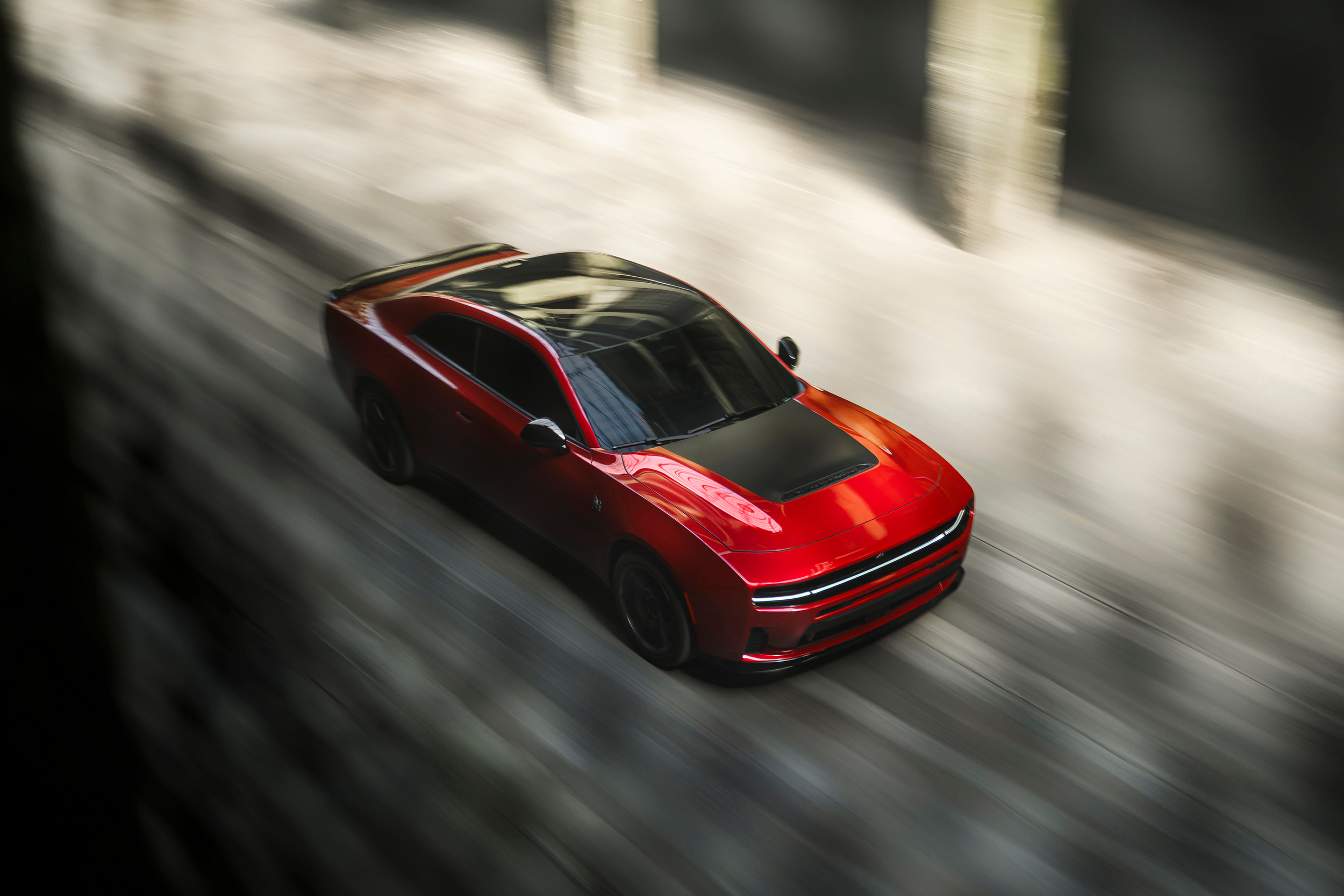
Besides the stripes, Dodge announced a new Satin Black hood graphic that costs $395. It’s an affordable and sporty addition that accentuates the Charger’s power dome hood and extends to the Sixpack’s unique hood bezel.
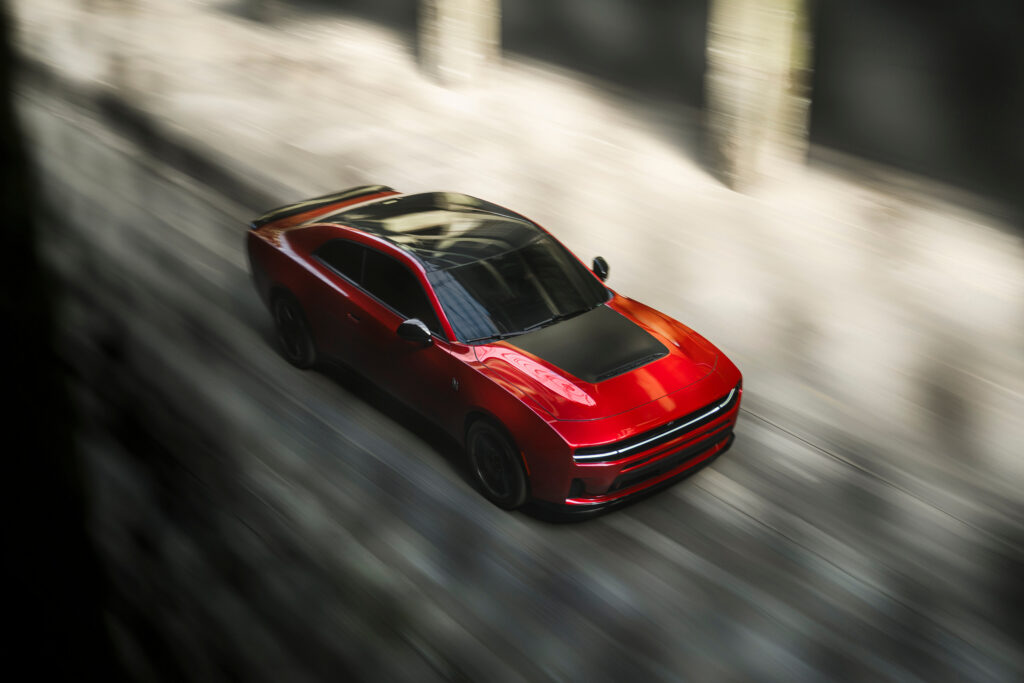
While the additions are minor, Dodge CEO Matt McAlear said “This is just the start of what owners can expect when it comes to customizing the all‑new Sixpack-powered Charger.” He added enthusiasts want personalization options and this is “just the beginning in turbocharging customization for the Sixpack.”
The company didn’t go into specifics, but noted owners will be able to get “bodyside graphics, [a] performance cat-back exhaust kit, bright pedal covers, and more.” It’s also worth noting the company offers Blacktop as well as Carbon and Suede packages.
As a refresher, the 2026 Charger R/T starts at $49,995 and features a twin-turbo 3.0-liter inline-six developing 420 hp (313 kW / 426 PS) and 468 lb-ft (634 Nm) of torque.
Customers can also get the $54,995 Charger Scat Pack, which has an upgraded engine producing 550 hp (410 kW / 558 PS) and 531 lb-ft (719 Nm) of torque. It enables the model to accelerate from 0-60 mph (0-96 km/h) in 3.9 seconds, before hitting a top speed of 177 mph (285 km/h).